
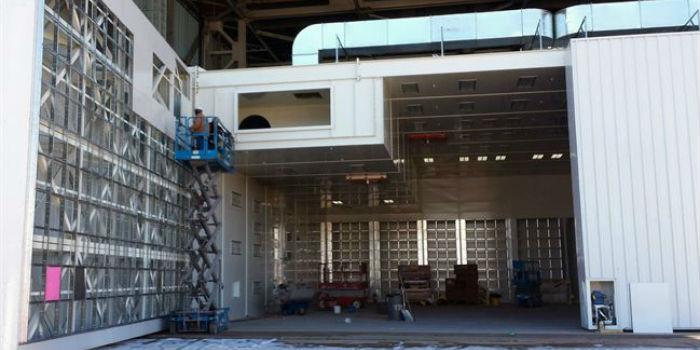
 United States. A coating application cabin called the next-generation F-35 has been developed at Hill Air Force Base, Utah, the first in a series of three planned units, which is nearly complete and will be operational by October 2017.
As part of a multi-year collaborative project with multiple stakeholders from across the Air Force, Department of Defense, government and industry, these facilities will enable safer, more economical and energy-efficient maintenance.
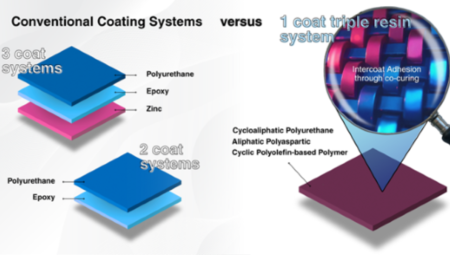
The new cabins are designed for the application of aircraft coatings, which are critical to the operational life of an aircraft. These coatings allow for things such as heat resistance, corrosion protection, and more on a platform. The typical application of coatings is extremely expensive in terms of energy consumption, as well as the environmental impact and safety needs to ensure the health and protection of maintenance personnel.
In addition, as an aircraft ages, old coatings need to be removed and replaced, a process that can use considerable amounts of energy. During the early stages of cabin research and design, a significant amount of time was spent consulting with maintainers as well as environmental and technical experts to collect data to help identify and understand the specific logistical needs of the F-35's depot teams.
The new cabins also take into account future robotic capabilities and are designed with sufficient space and free spaces to allow the addition of automated technologies for coating applications.
Through the use of advanced mechanical systems, sensors and energy-efficient technology, the new cabins provide organic capability to Air Force maintainers that will provide millions of dollars of energy savings over the lifecycle of these elite platforms.