
 International. Chemists at the Johannes Gutenberg University of Mainz (JGU), Germany, have developed a method that reliably hinders seawater fouling, which is effective, affordable and environmentally friendly.
Scale can occur, for example, as a result of the growth of bacteria, algae or molluscs in port facilities, on ship hulls and in aquaculture nets. The resulting damage and consequential costs can be significant. These are estimated to be equivalent to $200 billion annually in the shipping industry alone. Protective coatings applied to containers usually contain copper-based biocides. These have the disadvantage that they harm the environment, while resistance to them can also develop.
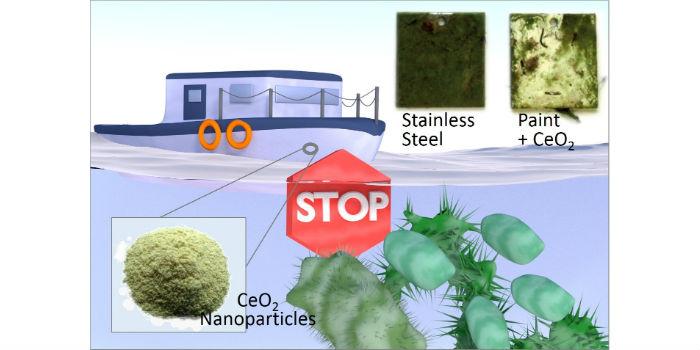
To find an alternative, Professor Wolfgang Tremel's Mainz research team decided to simulate a defense mechanism employed by algae and established that cerium dioxide nanoparticles can effectively prevent fouling. This discovery could contribute to the production of new protective coatings that are much less harmful to the environment than the helmet coatings used to date.
This natural defense process has been mimicked by the Mainz-based team of chemists using cerium dioxide nanoparticles. "Field tests have shown that cerium dioxide is an ecologically acceptable alternative to the mineral known as cuprite, a substance that is used as a biocide along with copper thiocyanate and copper pyridine at concentrations of up to 50% in antifouling coatings," explained Professor Wolfgang Tremel, from the JGU Institute of Inorganic Chemistry and Analytical Chemistry. But such copper compounds are toxic and accumulate in the environment. This is why some countries, such as Canada and Denmark, have imposed strict limitations on the use of copper-based antifouling coatings.
The researchers explained that biofilms are virtually everywhere. The main problem in relation to combating them using biocides and antibiotics is the risk of developing resistance. This drawback could be effectively circumvented in an ecologically acceptable way by applying surface coatings of cerium dioxide particles. This innovative technique thus has potential applications in the fields of ship and exterior coatings, roof coverings, outdoor textiles, polymer membranes used for desalination, enclosures used in aquaculture and in many plastic components.
Data Source Provider: Johannes Gutenberg University of Mainz.