
International.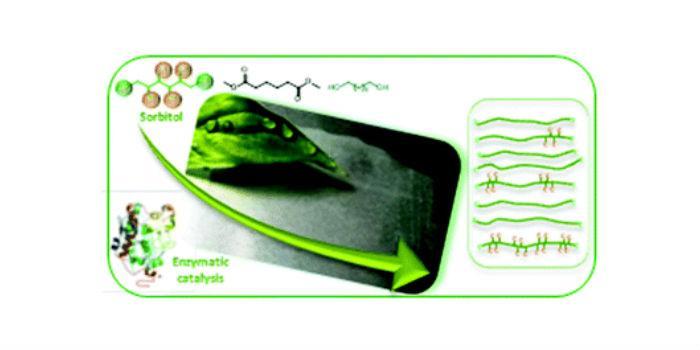 Researchers from the Laboratory of Physical Chemistry of the Eindhoven University of Technology (Netherlands), synthesized polyester polyols containing biologically based sorbitol through enzymatic polycondensation.
The selectivity of the biocatalyst for primary hydroxyl groups versus secondary hydroxyl groups allowed the preparation of near-linear renewable polyester polyols with improved hydroxyl functions, both as hanging groups and terminal groups.
In some cases, sorbitol units were evenly distributed in polyester polyol chains, while changes in the comonomers used and experimental conditions resulted in inhomogeneous and unique distributions of sorbitol, implying that some polyester polyol chains contained none and others contained multiple sorbitol units.
Solvent-based coatings were prepared by cross-linking functional polyester polyols with polyisocyanate curing agents. Increased functionality of polyester polyols led to an increase in the properties of the resulting cured coatings. In addition, when the sorbitol units were distributed inhomogeneously, a significant improvement in the chemical resistance and mechanical properties of the cured poly (urethane ester) network was observed. Using the bio-based diisocyanate EELDI (ethyl ester L-lysine diisocyanate) as a curing agent, almost totally renewable coatings with satisfactory mechanical properties were obtained.
Click here to view the study published in Polymer Chemistry.