
United States.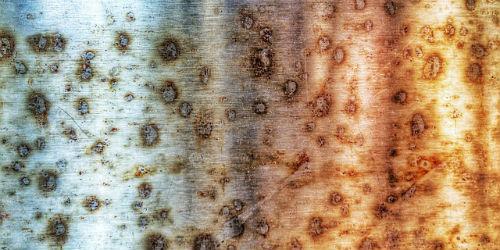 Researchers at Queen's University Cathleen Crudden (Chemistry), Hugh Horton (Chemistry) and Alastair McLean (Physics) have developed a new technique that makes high-precision carbon-based coatings a reality for many laboratories around the world.
The type of biosensor they are using in research is used in virtually every hospital in the developed world. The coatings will increase the robustness of medical instruments used in hospitals around the world and will also be used for corrosion resistance of metals.
"Previously, the technique used to apply these coatings required specialized equipment," dr. Crudden said. "We have now designed a simple process for the application of coatings without the need for specialized equipment, making the application process accessible to everyone."
This new technique builds on an earlier discovery in 2014 when the research trio developed a technique to prepare simple coatings of a molecule thick of organic molecules on the surface of metals. Despite being 100,000 times thinner than a human hair, this layer is capable of withstanding a battery of harsh chemicals, oxidants, acids and bases – a discovery that has positive implications for the microelectronics industry (an industry dedicated to the design and development of small electronics devices).
The recent discovery allows the coating to be applied without the use of specialized equipment therefore it is more accessible.
Data Source Provider: Queen's University.