
Mexico. Graduates of the University of the Americas Puebla (UDLAP) developed a coating for industrial use that does not wear out, absorbs pollutants and converts them into substances that serve as fertilizer for the earth.
The process of capturing gases is called physiosorption, a phenomenon by which a chemical compound adheres to a surface. After adsorption, that is, the retention of toxic substances, a physical-chemical process called photocatalysis occurs, where solar energy generates a chemical reaction. For this to happen, a catalyst is necessary, in this case it is the paint, since it does not change its structure and generates oxidation in the polluting gases present in the atmosphere.
The substance responsible for degrading the adsorbed is zinc oxide (ZnO), which when exposed to the sun's rays undergoes excitation in the electrons that compose it and thus begins the elimination of the captured toxicants. It should be noted that for this compound to have a better performance it was nano structured, that is, synthesized at one billionth of a meter.
Nanotechnologist Luis Huerta Hernández, who is conducting a research stay at the National Institute of Electricity and Clean Energy (INEEL), explained that when matter is nanostructured, the capture and degradation procedure is more efficient and that the intention of using this technology is to achieve that with little material a lot of pollutant can be absorbed and degraded quickly.
In addition, he mentioned that the toxic compounds adsorbed by the nano coating are converted into organic chemical species such as nitrates and sulfates that can be dissolved with water and have fertilizing qualities for the earth.
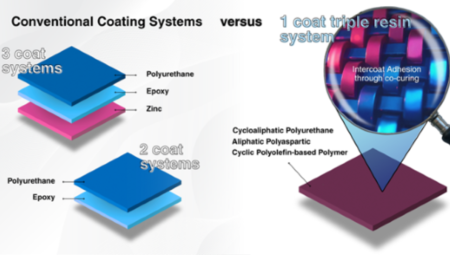
According to the INEEL scientist, prior to the manufacture of the material, the chemistry of the surface to be placed must be known since depending on the type of wall, it will be the coating. However, in the creation of the paint, a binder is used, since it is the polymeric substance that binds the nanostructured zinc oxide (ZnO ne) with the surface to be covered.
On the other hand, it is sought that the material is used in industrial sectors such as energy, since it produces a lot of pollution. "The idea is that by emitting gases through a tube and coating it with paint, it would be generating an effect of pollution and decontamination," said nanotechnologist Luis Huerta.
The coating does not have a patent and seeks to obtain resources to continue experimentation, improve the material and determine its availability date. The product is planned to be accessible as manufacturing it is cheap.
The UDLAP graduate added that he has been working with the material for a year from a thesis project. Currently, it is a multidisciplinary research in which the nanotechnologist Sabás Sánchez Tellechea graduated from the UDLAP and the engineer Alberto Sánchez Franco from the University of Sonora participate.
Source: Agencia ID.