
United States.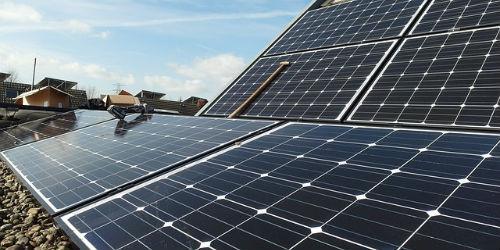 Researchers at the Masdar Institute and the Massachusetts Institute of Technology (MIT) developed a low-cost "super coating" that, when applied to the surface of a solar panel, improves the fundamental self-cleaning, abrasion resistance, self-healing, anti-reflective and antistatic properties of solar cells.
A solar cell with these five properties will be super-hydrophobic, meaning that water does not stick to the surface and will roll out easily, carrying dust and dirt more effectively; be scratch resistant, protects from scratches caused by rocks or dust; in the event that the surface is scratched, it repairs itself automatically; absorb higher levels of energy by reducing the amount of sunlight reflecting off the solar cell and back into the atmosphere; and repel negatively charged dust particles, preventing the solar cell from receiving excess dust.
"With our 'super coating,' we are not only achieving optimal anti-glare, anti-abrasion and self-cleaning properties together, we are also incorporating self-healing and anti-static properties, which have never been done before," the scientists explain.
This spray coating technique can coat large, curved surfaces much faster and cheaper than conventional coating techniques that require expensive equipment.
"Through this dynamic collaboration, we have been able to leverage research facilities at the Masdar Institute and MIT, including the Masdar solar field, which will be used to test the coating during the field testing phase of our research," the researchers said.