
United States.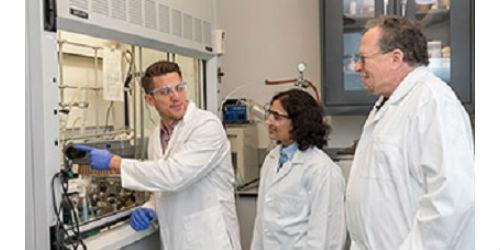 Seton Hall University professor Sergiu Gorun, from the Department of Chemistry and Biochemistry, and graduate students Karpagavalli Ramji and James Sullivan, are the co-inventors of a patent for "Self-Cleaning Protective Coatings".
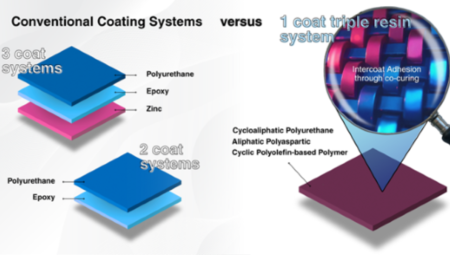
These protective coatings, sometimes referred to as "smart paints," actively repel contaminants and, as a result, can protect underlying surfaces better, longer, and more completely than other paints.
Professor Gorun, who is the director of the Centre for Functional Materials at Seton Hall University, in collaboration with colleagues and students, has also applied the technology underlying the patent – harnessing the power of light through fluorinated photosensitizers (fluorinated phthalocyanin) – to act as an eradication agent in the fight against cancer, with promising results.
With Karpagavalli Ramji, PhD student at Seton Hall, Professor Gorun has worked on the application of the same technology (with research assistance from undergraduate student Christopher Colomier) to remove contaminants from the water.
In paints: Fluorinated photosensitizers are mixed with a "breathable" polymer matrix paint or coating. The paint itself is silicon-based and has a very low carbon content, making it not susceptible to the ravages of activated "singlet" oxygen or produced by fluorinated photosensitizers. And although silicon-based matrix paint repels water, it allows oxygen to enter, which, along with light, requires fluorinated photosensitizers to work. And the work they do.
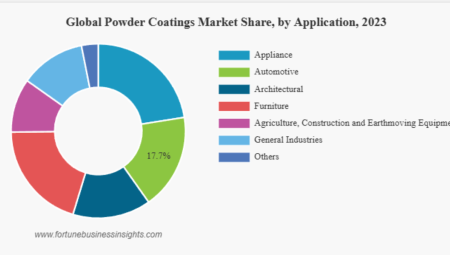
Corrosion is a major problem, and the global market for protective coatings is big business. According to the World Association of Paint and Coating Industries, total global sales of industrial coatings and paint exceeded US$128 million in 2015.
Data Source Provider: University of Seton Hall