
International.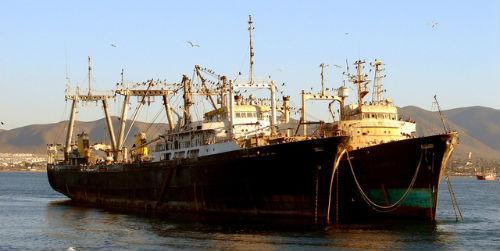 The European project "Ocean Energy Anti Fouling – Corrosion – Cavitation" (Oceanic) investigates the development of anti-corrosion and antifouling coatings for structures in contact with marine environments. The Gaiker-IK4 Technology Centre and the company REPOL are participating in this project within the Eranet call of the European Horizon 2020 Programme.
Atmospheric salinity, particularly seawater, has harmful effects on metals and other surfaces. To this, we must add the growth of living organisms that take advantage of these surfaces to fix themselves and create a habitat in which algae and mollusks are comfortable.
In boats and small structures cleaning can be simple and is usually done, but in large volume structures, such as marine platforms, docks, power generation systems (off-shore), etc., this task is complicated both by the dimensions of the structure itself and by the amount of organisms and dirt adhered.
All this translates into a high economic cost, to which we must add that current coatings can have a high degree of toxicity to health and the environment because they contain tributyl tin (in English Tributyltin - TBT).
The increase and generalization of these large structures means that this problem has a great impact at European level, especially in the long term. In addition, the large number of possible applications of an antifouling technology more effective than the current one makes us foresee a great demand for this type of coatings.
Faced with this problem, the Gaiker-IK4 Technology Center participates in the European oceanic project that investigates the development of thermally projected coatings that combine anti-corrosion and antifouling functionalities for long periods of time, up to 20 years, and applied in structures in static contact with seawater.
This European project also involves the Swedish Research Institute SP (coordinator of this project), end-user companies of technologies such as Corpower and Mikra, IK4-Azterlan, expert in anti-corrosion systems and measures, Repol and Gaiker-IK4 that will develop the material with antifouling additive, Skandinavisk Ytförälding, experts in TSA systems, and WaVEC, Portuguese institute for the development and testing of marine platforms.
To do this, a new molecule, Abamectin, will be integrated into a polymer matrix to project it as a coating. The combination of this coating with antifouling properties, together with the TSA (Thermal Sprayed Aluminium) process, which provides corrosion resistance, will provide less maintenance and greater durability to structures in contact with seawater.
Gaiker-IK4, an expert in coatings, will modify the polymeric material to make it compatible with this molecule and create an anticorrosive and antifouling coating.
Source: http://www.gaiker.es