
 International. Birds use sophisticated changes to the structure of their feathers to create multicolored plumage, using a process that could pave the way for the creation of paints and clothing colors that don't fade over time.
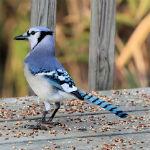
Using X-ray scattering at the ESRF facility in France to examine the blue and white feathers of the jay, researchers at the University of Sheffield found that the birds demonstrate a surprising level of control and sophistication in the colours they produce.
Instead of simply using dyes and pigments that fade over time, the birds use well-controlled changes in the nanostructure to create their brightly colored feathers — which are possibly used by jays to recognize each other. The jay is able to patent these different colors along an individual feather barb – the equivalent of having many different colors along a human hair.
The Jay's feather, which ranges from ultraviolet color through blue and white, is made of a nanostructured fluffy keratin material, exactly the same type that human hair and nails are made of.
The researchers found that this bird is able to demonstrate incredible control over the size of the holes in this spongy structure and fix them in very particular sizes, determining the color we see reflected in the feather. This is because when light hits the pen, the size of these holes determines how the light is scattered and therefore, the color that is reflected. As a result, larger holes mean a wider wavelength reflectance of light, which creates the color white. On the contrary, a more compact, smaller structure results in the color blue.
If the colors were formed with pigments created from the bird's diet, the color of the feather would fade over time. However, since nature has developed a way to create colors through structural changes, any nanostructure will remain intact, which explains why birds are gray as they age. In contrast, humans rely on hair color pigments. As these do not occur to the same extent as we age, therefore, they turn gray.
Dr Andrew Parnell, from the Department of Physics and Astronomy at the University of Sheffield said: "The conventional thinking was that to control light using materials in this way we would have ultra-precise and controlled structures with many different processing stages, but if nature can assemble this material 'on the wing', then we should be able to do it synthetically."
Parnell added: "This discovery means that in the future we could create durable coatings and synthetically coloured materials. We have discovered that it is the way in which it is formed, and the control of this evolved nanostructure – by adjusting the size and density of the holes of the spongy structure – that determines what color is reflected.
"Today's technology can't make color with this level of control and precision – we still use dyes and pigments. Now that we have learned how nature carries it out, we can begin to develop new materials such as clothing or paints that use these nanostructuring approaches. It would potentially mean that if we created a red jersey that uses this method, it would retain its color and never fade in the wash."