
 United States. Researchers at Harvard's John A. Paulson School of Engineering and Applied Sciences (SEAS) have demonstrated a way to make steel stronger, safer and more durable.
They claim that their new surface coating, made of raw nanoporous tungsten oxide, is the most durable anti-fouling and anticorrosive material to date, capable of repelling any type of liquid, even after suffering intense structural abuse.
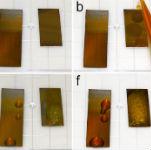
The accelerated corrosion test, in which the unmodified stainless steel (300 degrees) and the bottom of the A-SLIPS sample with a 600-nm porous thickness for filming on the steel, were exposed to a very corrosive reactive steel from Glyceregia.
"Our slippery steel is ordered in magnitude more durable than any anti-fouling material that has been developed before," said researcher Joanna Aizenberg. "Until now, these two concepts – mechanical durability and antifouling – were in conflict with each other. We need surfaces to be textured and porous to impart resistance to fouling but rough nanostructured coatings are inherently weaker than their bulk analogues. This research shows that careful surface engineering allows the design of a material capable of performing multiple, even contradictory, functions, without performance degradation.
The material could have far-reaching applications for commercialization, including non-fouling medical tools and devices, such as implants and scalpels, 3D printing nozzles and, potentially, larger-scale applications for buildings and marine vessels.