
 Mexico. In the paint, pharmaceutical, petroleum, food, dairy and construction industries, among others, it is necessary to characterize fluids. For this, rheometers are used, instruments that measure the fluidity index of a liquid, mixture or suspension, under the action of external forces.
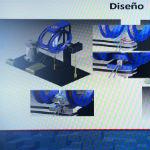
At the National Autonomous University of Mexico (Unam) a group of scientists developed a low-cost device for Newtonian and non-Newtonian fluids and, in particular, for slimming, which combines two types of movements. The so-called rotating sphere electromagnetic rheometer in sedimentation is in the process of being patented.
Francisco Godínez, a researcher at the Institute of Engineering (II) of the UNAM, explained that Newtonians are fluids that are defined "by a linear relationship between effort and deformation speed; non-Newtonians do not follow this Law that Isaac Newton proposed.
"We were specifically interested in characterizing slimming fluids. Their particularity is that when they apply a deformation at a certain speed they present a 'thinning' or decrease in viscosity". Examples of these are milk, paint or human blood.
To achieve this deformation, the device is based on the fall of a sphere through the fluid to be characterized, by combining that movement with a rotational one; both are given together.
The novel idea of combining these movements led to the application of the patent that already obtained the first approval by the Mexican Institute of Industrial Property (IMPI); an in-depth analysis of the instrument will now be performed.
Obviously, Francisco Godínez explained, there are already commercial devices; the question is how we could compete against that and the best way is with cost. "Ours could be cheaper, from hundreds of thousands and up to more than a million pesos, to less than 100 thousand."
To learn more about this development click here. http://www.dgcs.unam.mx/boletin/bdboletin/2015_421.html