
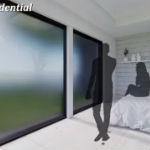
 United States. Researchers at the University of Cincinnati in Ohio have developed a technology that can do something that neither blinds nor today's smart windows are capable of.
This technology allows to create a variable coloration for windows in which the brightness, the color temperature (warm or cold as offered today by the different types of lamps) and the degree of opacity (to provide privacy while allowing light to enter) are adjustable by the user, and dynamically adapt to the preferences of the user.
The companies Hewlett Packard and EMD / Merck Research Labs also participated in the development of the technology.
An important feature of the development is that the structure that makes these "smart windows" possible is very simple to manufacture, allowing them to be affordable for businesses and homes. It can be integrated into new windows or even easily applied to existing windows, by means of a continuous coating that consists essentially of a very thin electrode panel.
The system would allow no one to see inside the windows, but it would allow more than 90% of the available light to enter. Or, a change of settings could reduce incoming light or change its color along the spectrum, from a bluish (cold) hue to a yellowish (warm) hue. Something that traditional blinds can't do that.
With information from noticiasdelaciencia.com