
United States. A research team is studying biological molecules used by other living things to survive sub-zero temperatures. The study is led by the University of Michigan.
The project includes researchers from Raytheon Technologies, North Dakota State University and the University of Minnesota. The project is funded by the Defense Advanced Research Projects Agency.
Spraying planes with de-icing liquids ensures that winter flights are safe. But the chemicals contained in those fluids are toxic and can also pollute waterways. The researchers received $11.5 million in funding for the project.
"For the last seven or eight years, my group has been making surfaces that have very low adhesion to ice. These anti-icing coatings can be very useful for a variety of applications. It includes wind turbines, power lines or airplane wings," said Anish Tuteja, the project's principal investigator. He is also a professor of materials science and engineering at the University of Michigan.
"However, for many other applications, it would be beneficial to eliminate icing entirely. So far, preventing icing for hours on end in freezing conditions has been a big challenge," Tuteja continued.
The project aims to find molecules that can be used to manipulate ice and snow in various ways. This includes changing the temperature at which water freezes, increasing and decreasing the force with which ice adheres to surfaces. This also includes changing the structure of the ice formed and inhibiting or stimulating the growth of ice crystals on surfaces.
To achieve their goals, the research team looks to plants, animals and microbes for inspiration. Many organisms produce molecules that allow them to survive frozen or keep their bodies from freezing.
Other organisms produce molecules that "nucleate ice." It stimulates ice formation at warmer than usual temperatures.
The bacterium Pseudomonas syringae produces ice-nucleating proteins to freeze plant leaves. Ice helps break down plant cells so that bacteria can access the nutrients inside.
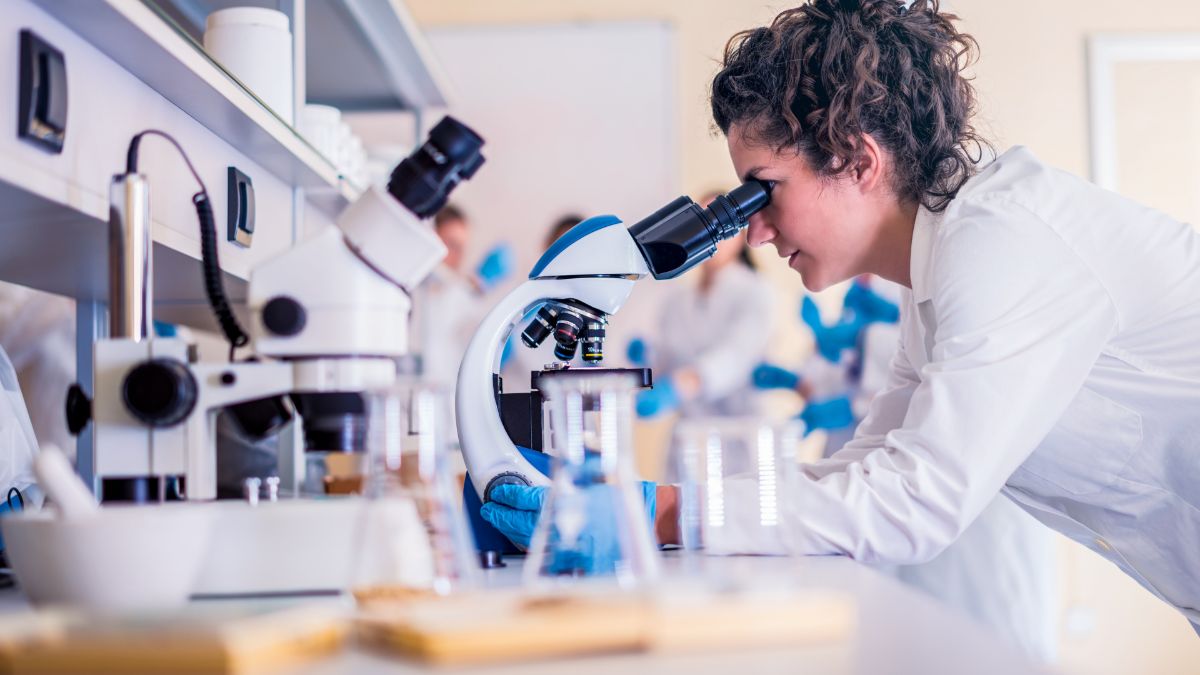
The researchers created and mixed the natural molecules in the lab. They hoped to find less toxic and biodegradable alternatives to current de-icing chemicals as well as molecular cocktails. This could enable entirely new technologies.
"If you combine the molecules in the right proportions, the freezing point can drop more than each molecule could reach individually," Tuteja said.
When starting from even a small subset of known molecules, the number of possible combinations and proportions can be difficult to manage. The research team must measure the effectiveness of more than 5,000 different ice-forming and antifreeze molecules during the first year of the project. That number could double or triple as the project progresses.
To quickly study these molecular combinations, the team plans to build an automated platform to determine the freezing temperatures of up to 1,500 samples per day. The team hopes to narrow their search to the 30 most promising molecule candidates. This is for further study at the end of your first year.