
International. A number of firms have agreed with Japan's New Energy and Industrial Technology Development Organization (NEDO) on a project focused on developing revolutionary biofabrication technology to engineer hydrogen-oxidizing bacteria using CO2.
These are DIC Corporation, Sojitz Corporation, Central Research Institute of Electric Power Industry, Green Earth Institute, Toray Industries and Daicel Corporation.
The project was selected for sponsorship under NEDO's Green Innovation Fund Project category, 'Promoting carbon recycling using CO2 from biofabrication technology as direct feedstock'.
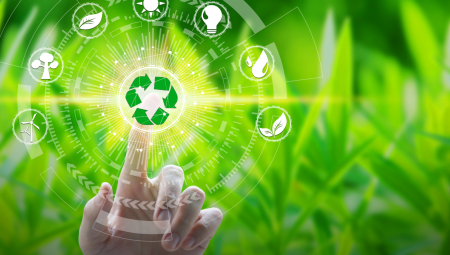
The project involves R+D for the manufacture of a variety of chemicals and feed materials from CO2 and H2. This new biomanufacturing technology will be the world's first example of a commercialized bioprocess that directly uses CO2 and H2 for the production of chemicals and presents a promising option for achieving a carbon-neutral society.
The hydrogen-oxidizing bacteria to be engineered is one of the microorganisms that has the fastest rate of CO2 fixation. Taking advantage of this high fixation capacity through genetic engineering, it is possible to engineer bacterial strains that can produce useful chemicals with high efficiency.
The resulting compounds are then used as raw materials in a wide variety of everyday applications, including plastics, inks, paints, textiles and cosmetics. In addition, bacterial residues produced in the biomanufacturing process from the biofabrication process can be used as an alternative protein source for feed, representing a solution to the recent increase in demand for alternative protein sources.
Therefore, biomanufacturing technology will simultaneously increase the decarbonization value of companies and provide a solution to food problems.
Along with the development of bacterial strains, larger-scale demonstrations will be conducted to establish a safe and highly efficient gas fermentation method and to accurately measure CO2 reduction effects to add environmental benefits to products.
The six organizations will combine their expertise, technologies and acquired functions to realize the social implementation of this next-generation biomanufacturing technology to advance the structural transformation of the chemical products and materials industries addressing the growing decarbonization needs.