
United States. A team of researchers from the University of Toronto designs a solution to reduce the amount of microplastic fibers that are shed when washing synthetic fabrics.
The researchers say the slippery solution to this problem could already lie in household cabinets: a silicone-based organic polymer coating.
When clothes made from synthetic fabrics go to the washing machine, the friction caused by cleaning cycles produces tiny tears that cause microplastic fibers, which are less than 500 micrometers long, to break and travel down clothes drains to enter waterways.
There, particles can be difficult to remove and take decades or more to fully decompose.
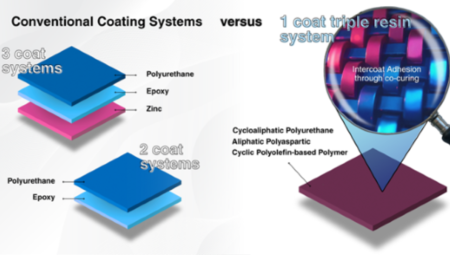
Kevin Golovin, an assistant professor of mechanical and industrial engineering in the College of Applied Science and Engineering, and colleagues have created a two-layer coating made of polydimethylsiloxane brushes (PDMS), which are single-polymer linear chains that grow from a substrate to form a nanoscale surface layer.
Experiments conducted by the team show that this coating can significantly reduce microfiber shedding from nylon clothing after repeated washing, according to findings published in Nature Sustainability.
"My lab has been working with this coating on other surfaces, including glass and metals, for some years now," Golovin said.
"One of the properties we've observed is that it's quite slippery, which means it has very little friction." PDMS is used in shampoos to make hair shiny and slippery, and is also used as a food additive in oils to prevent liquids from foaming when bottled.
Sudip Kumar Lahiri, a postdoctoral researcher in Golovin's lab and lead author of the study, argues that reducing the friction that occurs during wash cycles with a PDMS-based fabric finish could prevent fibers from rubbing and breaking during washing.
One of the biggest challenges the researchers faced during their study was ensuring that PDMS brushes remained in the fabric. Lahiri, who is a textile engineer by trade, developed a molecular primer based on his understanding of fabric dyes.
Lahiri thought that the type of bonding responsible for maintaining the color of dyed clothing after repeated washes would also work for PDMS coating.
Neither primer nor PDMS brushes work separately to decrease the shedding of microplastic fibers. But together they created a strong finish that reduced microfiber release by more than 90% after nine washes.
"PDMS brushes are environmentally friendly because they are not derived from petroleum like many polymers used today. With the addition of the Sudip primer, our coating is strong enough to stay on the garment and continue to reduce microfiber shedding over time," Golovin continued.
Since PDMS is naturally a water-repellent material, researchers are currently working to make the coating hydrophilic so that coated fabrics can better absorb sweat.
The team also expanded the research to look beyond nylon fabrics, including polyester blends and synthetic fabrics.
"Many textiles are made from multiple types of fibers," Golovin added. "We're working to formulate the right polymer architecture so that our coating can durably adhere to all those fibers simultaneously," he said.