
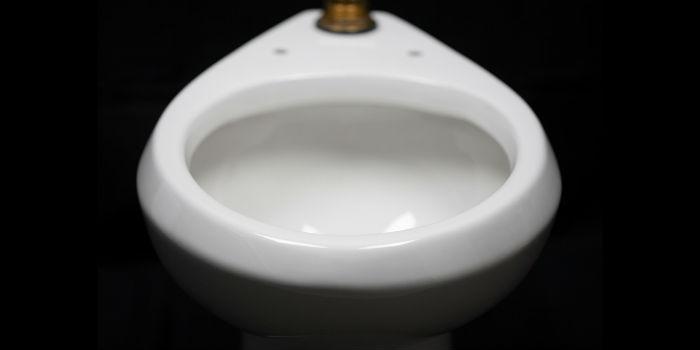
 United States. The new coating technology from Penn State researchers is designed to make toilets so slippery that they essentially clean themselves, cutting water use in half in the process.
The design is inspired by the super slippery pitcher plant. It has a rough surface that lubricates when it rains, so insects slide inward to be digested. "It's this combination of water and microscale roughness that makes the surface so slippery," says Tak-Sing Wong, an associate professor of mechanical engineering and biomedical engineering and one of the authors of a new paper on the technology. published in Nature Sustainability.
Like the plant, the design uses two separate coatings, which create a combination of roughness and lubrication. When the coating is sprayed onto a surface, such as a ceramic toilet bowl, it covers the surface with nanoscale polymer "hairs" — 100,000 times thinner than human hair — that permanently adhere to the surface. A second spray coats the microscopic hairs with lubrication. In lab tests with synthetic poop, the researchers observed how debris slipped effortlessly from the surface of a toilet bowl, even though the poop normally adheres to toilets, requiring large amounts of water to remove. The coating also repels bacteria.
Toilets still need to use water to remove debris through pipes. But the invention can cut water use in half. The coating can be applied to a toilet in five minutes and requires only one coating, not the two that were used in the initial test. After that, if consumers have a double flush toilet, they can stop using the option for a larger flush. Others who find they need much less water to lower everything could hack into a low-volume discharge by placing water bottles in the tank to displace the water.
Source: Penn State.