
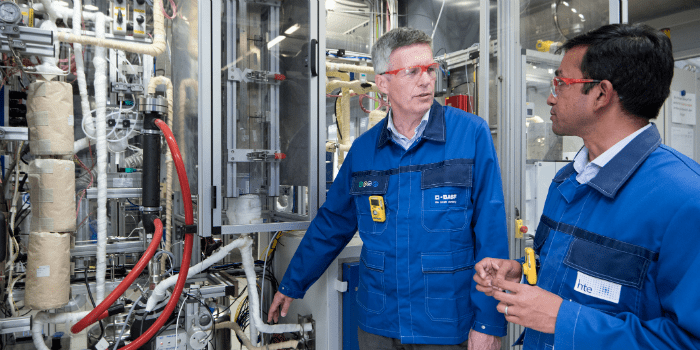
 Germany. Through the Carbon Management Program implemented by BASF for the reduction of gas emissions in the chemical industry, the company announced that it applied for a patent for a process to produce methanol without greenhouse gas emissions, with the help of OASE gas treatment technology.
If the successful implementation of this method on an industrial scale is achieved, the entire production process, from the production of syngas to pure methanol, will no longer release carbon dioxide emissions. It should be noted that the production processes of the most important basic chemicals are responsible for approximately 70% of greenhouse gas emissions in the chemical industry.
"We are optimistic that our climate-friendly approach will better adapt methanol synthesis to the requirements of the twenty-first century," says project manager Maximilian Vicari of BASF's Intermediates division.
"Nearly 100 years after the first industrial-scale production of this basic chemical using BASF's high-pressure process, we are now taking a leading role in writing the newest chapter in the history of methanol." Vicari estimates that it will be around ten years before this new process takes place in an industrial-scale plant.
Normally, methanol is made from syngas, which until now has been obtained mainly from natural gas. Using special catalysts, this can be converted into crude methanol, which can be further processed after purification. In the new process, the synthesis gas is generated by the partial oxidation of natural gas, which does not cause carbon dioxide emissions and has proven advantageous in a study conducted jointly with Linde Engineering.
Ingenuity was required to address the melting and processing of waste gas streams that arise during methanol synthesis and distillation and that cannot be avoided even with optimal process management. These waste gas streams containing methane, carbon monoxide, carbon dioxide and hydrogen are incinerated in a process of oxyfuel impregnation with pure oxygen. This results in a small volume of flue gases with a maximum carbon dioxide content. The flue gas is then washed by BASF's OASE process for complete carbon dioxide recovery.