
 Spain. It is estimated that currently the pollution existing in indoor environments is two to five times greater than outside, which can affect the state of health of people. To combat it, different innovative technologies purifying the indoor environment are emerging, capable of remedying the effects of many harmful pollutants.
Among these pollutants, the one that has aroused the greatest interest in recent years, due to its impact on indoor spaces, is formaldehyde. This substance causes irritation of the tissues when it comes into direct contact with them and there are even studies that have found cases of cancer in the nose and throat (nasopharyngeal cancer) in people exposed to certain amounts of formaldehyde in the work environment. In this regard, the International Agency for Research on Cancer (IARC) and the EPA have determined that formaldehyde is likely carcinogenic in humans.
The solutions developed so far are based on titanium dioxide (TiO2), although its main problem is that it requires ultraviolet radiation for its activation, so they are not efficient in indoor environments in which the crystals act as a filter of this radiation.
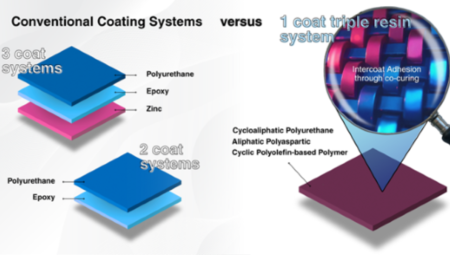
To find a solution to this problem and improve the quality of life and health of people, AIMPLAS, Technological Institute of Plastics, currently develops coatings for air purification in indoor environments. Specifically, these are coatings with application in floors, furniture, decorative paint, composites and ceramics based on porous organometallic compounds (MOFs) that allow formaldehyde to be photodegraded.
These investigations are part of the Ambicoat project, funded by the Ministry of Science, Innovation and Universities within the call for Collaboration Challenges 2017, file number RTC-2017-6428-5. Specifically in Challenge 5 of the Call For Collaboration Challenges: "Action on climate change and efficiency in the use of resources and raw materials".
Six-member consortium
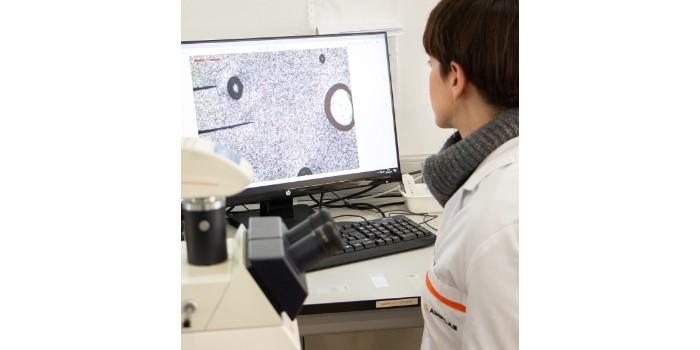
Ambicoat is coordinated by Aimplas and integrated by five more partners: the University of Valencia (ICMOL, MatCo) will be in charge of synthesizing the organometallic compounds, MOFs, and launching a new company (Spin-off) to supply MOFs to industrial partners; Aimplas will develop the method of dispersion of MOFs in liquid resins, together with the companies Omar Coatings and Pectro, which will formulate the different coatings for the different applications. Aimplas and ITC, also a technology centre, will apply the coatings. Finally, it will be the company Keraben that will validate the developments in real demonstrators, in which ITC will measure the formaldehyde degradation of the photocatalytic coatings designed in the project.
Source: www.aimplas.es