
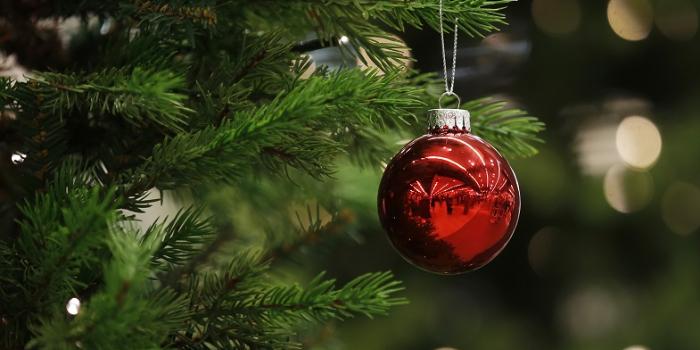
 International. Abandoned Christmas trees could be saved from a landfill and turned into paint and sweeteners for food according to new research by the University of Sheffield.
Christmas trees have hundreds of thousands of pine needles that take a long time to decompose compared to other tree leaves. When they rot, they emit huge amounts of greenhouse gases that then contribute to the carbon footprint.
Cynthia Kartey, a PhD student in the Department of Chemical and Biological Engineering at the University of Sheffield, found that useful products can be made from chemicals extracted from pine needles when they are processed.
The main component (up to 85 percent) of pine needles is a complex polymer known as lignocellulose. The complexity of this polymer makes the use of pine needles as a product for biomass energy unattractive and useless for most industrial processes.
Cynthia said: "My research has focused on the breakdown of this complex structure into high-value industrial chemical raw materials, such as sugars and phenolics, which are used in products such as household cleaners and mouthwashes.
"Biorefineries could use a relatively simple but unexplored process to break down pine needles."
With the help of heat and solvents such as glycerol, which is inexpensive and environmentally friendly, the chemical structure of pine needles is broken down into a liquid product (bio-oil) and a solid by-product (bio-char).
The bio-oil typically contains glucose, acetic acid and phenol. These chemicals are used in many industries: glucose in the production of sweeteners for food, acetic acid for the manufacture of paints, adhesives and even vinegar.
The process is sustainable and generates zero waste, as the solid by-product can also be useful in other industrial chemical processes. Fresh and older trees can be used, abandoned Christmas trees.
Cynthia continued: "In the future, the tree that decorated your house during the festive period could be turned into paint to decorate your house once again."
The UK uses up to 8 million natural Christmas trees during the festive period each year and sadly around 7 million trees end up in landfills.
If pine needles were collected after Christmas and processed in this way, the chemicals could be used to replace the less sustainable chemicals currently used in industry.
This could lead to a decrease in the carbon footprint by reducing dependence on imported Christmas trees based on artificial plastic and a reduction in the amount of biomass waste going to landfills.
Dr James McGregor, a senior lecturer in the Department of Chemical and Biological Engineering, said: "The use of biomass (plant-derived materials) to produce fuels and chemicals that are currently made from fossil resources will play a key role in the future global economy."
"If we can use materials that would otherwise be wasted in such processes and thereby recycle them, there are other benefits."
"In our research group, we are currently investigating the production of valuable products from a variety of organic waste, including forest sources, spent grain from the brewing industry, and food waste; along with research processes for the conversion of carbon dioxide into useful hydrocarbon compounds."
Data Source Provider: University of Sheffield.