
 International. In a new study, scientists applied a non-destructive macroscopic method to characterize the mechanical surface properties of polymer coatings under accelerated weather conditions.
The surface of coatings and plastics is the first target in any degradation process initiated by ultraviolet (UV) radiation or mechanical stress (through scratches and abrasion). Damage to the surface can lead to changes in optical, morphological and mechanical properties and can lead to pathways for moisture and corrosive agents to enter. Current test methods for monitoring the performance of protective coatings focus on chemical and optical properties, such as color and brightness measurements, or invasive tests such as abrasion and cross-cut adhesion.
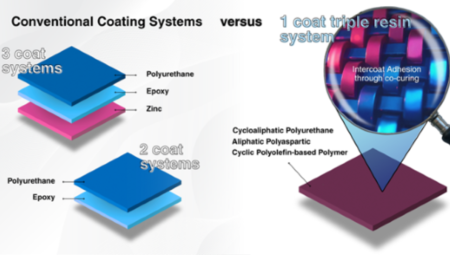
In a new study, a non-destructive macroscopic performance protocol using nanoindentation metrology was applied through a well-controlled scratching test to assess scratch resistance and monitor changes in surface mechanical properties in a protective coating under accelerated weathering. Polyurethane (PU) coatings with different polyol were selected for the study. The coating samples were exposed to high-intensity UV radiation at 55°C and 75% relative humidity.
Exposed samples were removed at UV exposure times determined for surface module/hardness and scratch resistance characterization by nanoindentation and scratch testing. The effect of polyol type and UV radiation dose on scratching damage (scratching morphology) was investigated and correlated with surface hardness and modulus of materials.
Source: Journal of Materials Chemistry.