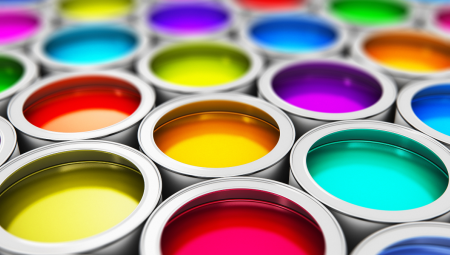

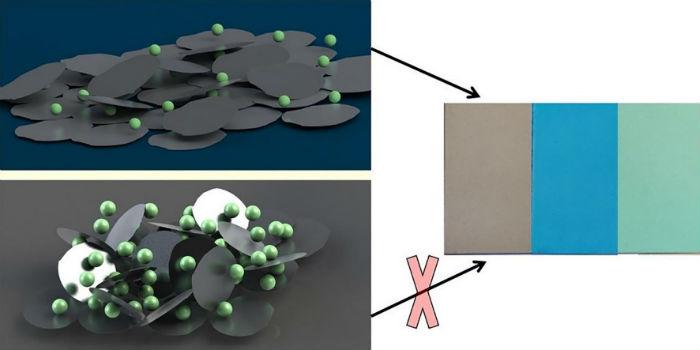
 International. A group of Chinese researchers prepared four colored coatings with low infrared emissivity using polyurethane as an adhesive, aluminum as a charge, and nanometric pigment as paint, respectively.
The influence of nanometric pigment on the color, surface brightness and infrared emissivity of the composite coating was systematically investigated. The microstructure of the coating surface was characterized, and the mechanism of the nanometric pigment was discussed in detail.
These results indicate that the color of the coatings changes significantly, the infrared emissivity increases slightly and the surface brightness decreases rapidly due to the effect of the nanometric pigment. Both flake aluminum and pigment particles show a uniform and compact distribution through microscopic analysis.
In addition, a theoretical model is proposed to explain this mechanism from the analysis of color and emissivity, which indicates that pigment particles play an important role in the formation of different particle arrangements between aluminum and colored pigments during the drying process, and nanometric pigment contributes to preparing the colored coating with low infrared emissivity due to its small particle size, low density and gravity.
Source: https://www.sciencedirect.com