
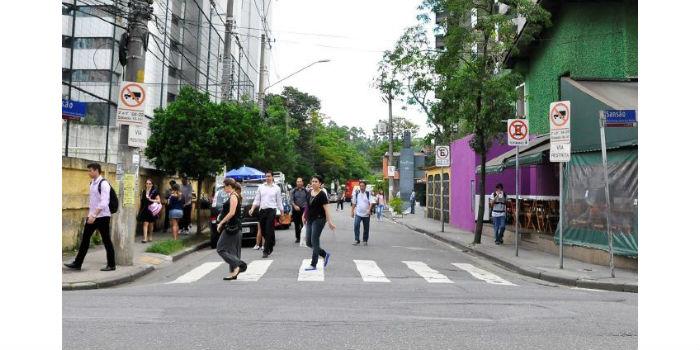
 Brazil. This year's edition of the Mobility Round (held September 17-23, in São Paulo) brought Dow technology into an urban mobility project. In partnership with Indutil, the company helped transform João Carlos Borges Street, access from cpTM's Berrini Station, in São Paulo, into a more modern, safe and aesthetically pleasing space for the movement of people. The initiative is directly linked to Dow's strategy of fostering solutions to improve urban infrastructure.
Through the innovative technology for road demarcation of Dow and Indutil, the road of this street has been expanded allowing a greater area of coexistence by prioritizing the needs of pedestrians, in line with the global trend of urban design.
In line with the accelerated pace of large cities, the formulation developed by companies is easier to apply and has a fast drying, which guarantees greater agility and productivity. In addition, it is more sustainable, with low emission of toxic substances, and provides greater durability and resistance to weathering. This project was presented to the population on September 24.
The paint used to demarcate the extension of the new joão Carlos Borges street road is Indutil's Acquabike, which features Dow's Maincote AEH technology, a hybrid that unites the chemical resistance of epoxy with the UV resistance of an acrylic.
The solution has a high performance and an optimal cost-benefit for the signaling of roads and parking lots. One of the examples of application are the bicycle routes, which, depending on the mobility plans of the main cities of Latin America, have presented an expressive growth in mileage throughout the region. This technology for coating has already been applied in other important places in the capital of São Paulo, such as the Republic Square and Sumaré Avenue, and in brands of the Copacabana bicycle route, in Rio de Janeiro.