
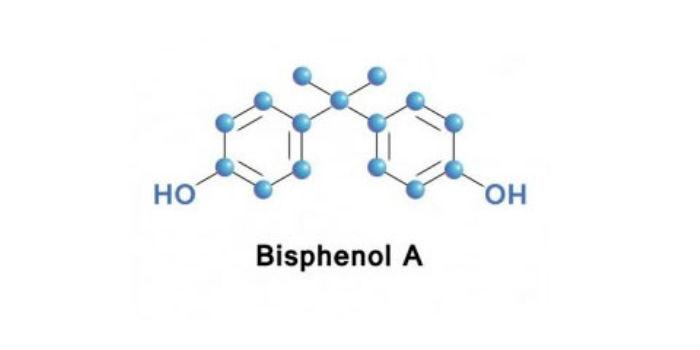
 International. On 16 June 2017, the ECHA Member States Committee (MSC) unanimously agreed to identify 4,4'-isopropyliddenedphenol (bisphenol A, BPA) (EC 201-245-8, CAS 80-05-7) as a substance of high concern (SVHC) under REACH due to the alleged endocrine disrupting properties (ED) that can cause serious effects on human health generating a level of concern equivalent to that of carcinogenic substances, mutagenic and toxic to reproduction (CMRs of category 1A or 1B). This was a proposal from France.
Since January 2017, bisphenol A (BPA) has already been included in the REACH candidate list for authorisation, based on its classification as a category 1B substance affecting reproduction. However, according to this new decision, the entry for bisphenol A from the candidate list has also been updated to include endocrine disrupting properties. In practical terms, it does not matter whether a substance is listed once or several times, the obligations related to an inclusion in the Candidate List are the same.
The identification of an SVHC does not determine whether the use of a substance is hazardous, it is a risk-based approach based solely on the intrinsic properties of a substance, without considering its actual use, real-life exposure and potential risk. The inclusion of BPA on the Candidate List as such, therefore, does not mean that its uses are unsafe. Identification as SVHC is the first formal step that could eventually lead to authorization requirements under REACH.
Currently, BPA can be used in food contact applications for consumers. Food contact materials (FCM) are regulated by EC Framework Regulation No 1935/2004 and the use of BPA as a monomer for plastic is explicitly permitted by EU Regulation No 10/2011, with a specific migration limit of 0.6 mg of substance per kg of feed, except for the manufacture of polycarbonate bottles for infants for which it is prohibited.
To assess the safety of substances used in the manufacture of food contact materials, the European Food Safety Authority (EFSA) carries out safety assessments and risk assessments. In its most recent scientific opinion on the safety of BPA (published in January 2015), the authority concludes that BPA poses no risk to the health of consumers of any age group (including unborn children, infants and adolescents) at current exposure levels.
Exposure to diet or a combination of sources (diet, suspended substances in powder, cosmetics, and thermal paper) is considerably below the safe level (the "tolerable daily intake" or TDI) http://www.efsa.europa.eu/en/press/news/150121). However, it is planned to carry out a new re-evaluation of the toxicity of BPA in 2018 that could lead to a modification of the legal status of this substance. So far, inclusion on the Candidate List does not affect the compliance of BPA-based food contact materials with the respective legislation.
Source: AIMPLAS.