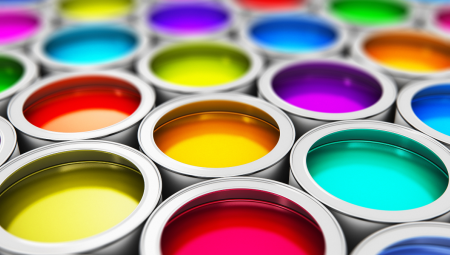

International.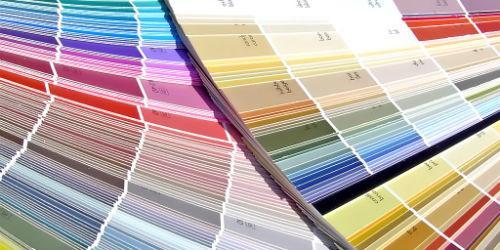 Last Monday, March 21, the International Day of Color was celebrated, established since 2009. The reason for the celebration is due to the fact that color is one of the most influential phenomena in people's lives, since it contributes to the knowledge of the external world from visual perception.
The choice of date was due to its symbolic relationship with the equinoxes, where night and day have approximately the same duration and a complementary nature of light, dark, light and shadow.
Color is a perception
Each person perceives colors differently, since it is a product of the mind. The brain picks up different colors when the human eye perceives different frequencies of light, which reflects off objects and reaches the eyes through the cornea and then passes into the pupil. There an image is reflected on the retina and on the walls of the eyeball and is absorbed by pigments of photosensitive cells that recognize the differences between the different wavelengths of light, that is, the colors.
These photoreceptors convert light into electrochemical signals that are processed by neural circuits found in the retina and eventually sent to the brain. This is how colors differ and you have a perception of the world through the sense of sight.
History of the white
White is an achromatic color, of maximum clarity and zero darkness, which is perceived as a result of the photo reception of intense light. It can not be obtained by mixture, to represent it white pigment is used.
The first whites used by man were obtained from nature (white clay or mother-of-pearl). Albayalde, better known as lead white, was one of the first synthetic pigments that man managed to produce 2,500 years ago. It consisted of suspending lead dishes on vinegar vapor, dipping them in manure for a couple of months and then scraping the layer of white material that formed on the surface.
This procedure to obtain the white pigment was used for several millennia, but its substance was toxic. In 1785, zinc white was discovered. It was a cold, bluish white, less covering than lead white but not toxic. Very useful for painting pictures for its creamy consistency.
Around 1870 the first attempt to use titanium oxide as a pigment took place, but it was between 1916 and 1918, that industrial manufacturing began in the United States. In the U.S. and Norway of the "Titanium White" with 25 percent titanium dioxide as a component.
TiO2 (Titanium Dioxide)
Titanium Dioxide is the premium white pigment with the highest protective power used as a critical ingredient in paints, plastics, papers and other applications such as printing inks, textiles and leathers.
"Titanium white" is considered one of the best white pigments in existence today. It is the most durable, non-toxic and chemically stable. In addition, it is not attacked by most organic and inorganic agents. It is used as a white pigment for its scattering properties, reflects almost all light and absorbs part of the UV radiation protecting its contents. It has the highest covering and coloring power of all pigments.
The paint of the vehicles is more durable and has wider color ranges thanks to the white pigment of Ti02, a key component in the automotive industry. More and more parts are replaced by lighter materials and plastic materials of great value in terms of resistance against dents and scratches, providing more durability in the face of inclement weather and opacity of colors.
It also appears on coatings and paints of cruise ships, ocean liners, ships, train cars and airplanes.
The Titanium Dioxide Market
The Chemours Company, a global chemical company created in July 2015 as a result of the separation of DuPont's chemical business, is one of the largest producers of Titanium Dioxide globally. Since 1950 the company has been a pioneer in the application of titanium dioxide technology in the coatings sector, ranking first among the leading manufacturers.
With information from The Chemours Company.