
I. Introduction
Zinc-rich paints (PRZ) are widely recognized as the best choice for corrosion protection of steel. Their cathodic protection mechanism and ability to generate an effective barrier against moisture and corrosive agents make them indispensable in various industries. However, a key question arises: are they recommended in acidic environments? This article discusses in depth the protection mechanism of PRZs, their different types, performance tests, applicability according to ISO 12944 and their behavior in acidic and alkaline media.
By Jaime Baldeón Garibaldi*
II. Protection mechanism
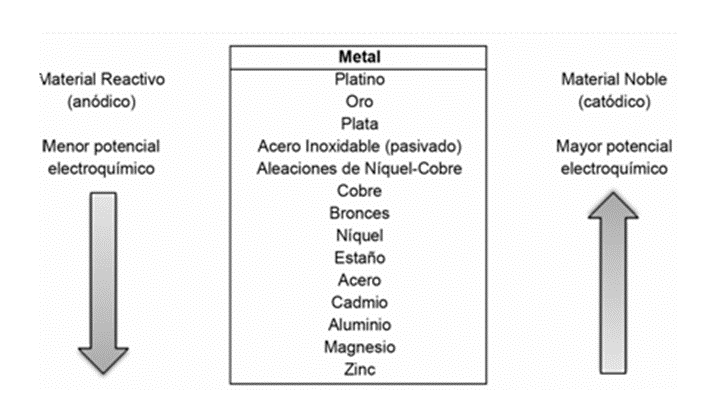
PRZs work primarily by cathodic protection and the creation of a physical barrier. Zinc, being more electronegative than steel, acts as a sacrificial anode. The main electrochemical reactions involved are:
Oxidation of zinc.
Reduction of oxygen in neutral or alkaline medium.
Reduction of oxygen in acidic medium.
When the coating is damaged, the electrons released by the zinc prevent oxidation of the underlying steel, ensuring its protection.
III. Types of zinc-rich paints
1. Zinc Powder Content
To ensure cathodic protection, the zinc dust content in the dry film should be greater than 76 % for PRZIs and more than 80 % for PRZOs. The lower the content, the protection is limited and the barrier becomes ineffective.
2. Organic vs. Inorganic Vehicle
Inorganic PRZs (PRZIs) – offer better cathodic protection due to their higher conductivity (100% cathodic protection efficiency), but require curing under controlled conditions. They are based on Na/K ethylsilicate polymers which, after reacting with moisture, become inorganic Na/K silicates.Organic PRZ (PRZO): they are more flexible and adherent, but their cathodic protection capacity is lower. They are based on organic polymers of epoxy-polyamides, polyurethanes-isocyanates or acrylics. Its organic structure, being insulating, reduces the efficiency of cathodic protection.
IV. Accelerated Performance Testing
PRZs are evaluated with accelerated tests under technical standards:
Salt Spray (ASTM B117) – NaCl mist exposure to simulate marine corrosion.
Prohesion (ASTM G85-A5): alternation of wet-dry cycles to evaluate adhesion and strength.
Bullet hole test: evaluation of the behavior of PRZ in the face of mechanical impacts.
V. ISO 12944 and Environmental Corrosivity Categories
ISO 12944 classifies corrosive environments from C1 to CX:
C1-C2: dry indoor environments (PRZ not necessary).
C3-C4: moderately aggressive industrial environments (organic PRZ recommended).
C5-CX: Extreme marine and industrial environments (inorganic PRZ is the best choice).
Examples of industries where PRZ is recommended:
Structures on offshore platforms.
Bridges exposed to saline environments.
Storage tanks in refineries.
Examples of industries where PRZ is not recommended:
Chemical plants with constant exposure to strong acids.
Environments with condensation of organic acids.
VI. Do they work in acidic environments?
PRZs perform excellently in alkaline and neutral media (pH 4-14), but their efficiency drops dramatically in acidic media (pH <4). In these environments:
Zinc dissolves quickly in acidic solutions, losing its protective effect.
If the top epoxy coating tears, the exposed zinc reacts with the acid and leaves the underlying steel vulnerable.
VII. Painting schemes
1. Tank lining.
For hydrocarbon environments, it is recommended:
PRZ + cycloaliphatic epoxy-amine.
PRZ + epoxy-novolaca 100% solids.
PRZ + epoxy-phenolic.
With current technologies, PRZs for tank lining can be dispensed with.*
For acidic environments, it is recommended:
100% solid cycloaliphatic epoxy-amine.
100% solid epoxy-novolaca.
Epoxy-phenolic.
2. Outdoors with high UV exposure
Recommended systems include:
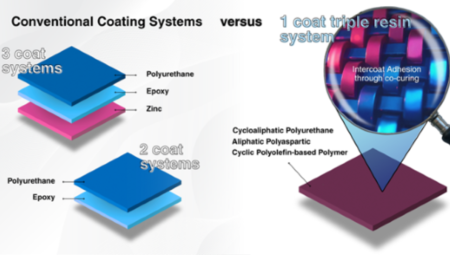
Three-layer: PRZ + epoxy + polyurethane.
Bilayer: PRZ + polyaspartic.
Bilayer: PRZ + polysiloxane.
Polyaspartic and polysiloxane systems replace traditional epoxies/polyurethanes due to their increased UV resistance and durability.
VIII. Conclusions
PRZs are the standard in corrosion protection for steel in harsh environments. However, their performance varies depending on the environment. In acidic media, their applicability is limited and it is preferable to opt for high-crosslinking barrier coatings, such as cycloaliphatic epoxy-amines, epoxy-novolac, or epoxy-phenolics, to ensure the longevity and performance of the protected asset.
*Jaime Baldeón Garibaldi R&D Senior Formulator | Protective and Marine Coatings | Floor Coatings | Fire Stop Coatings.