
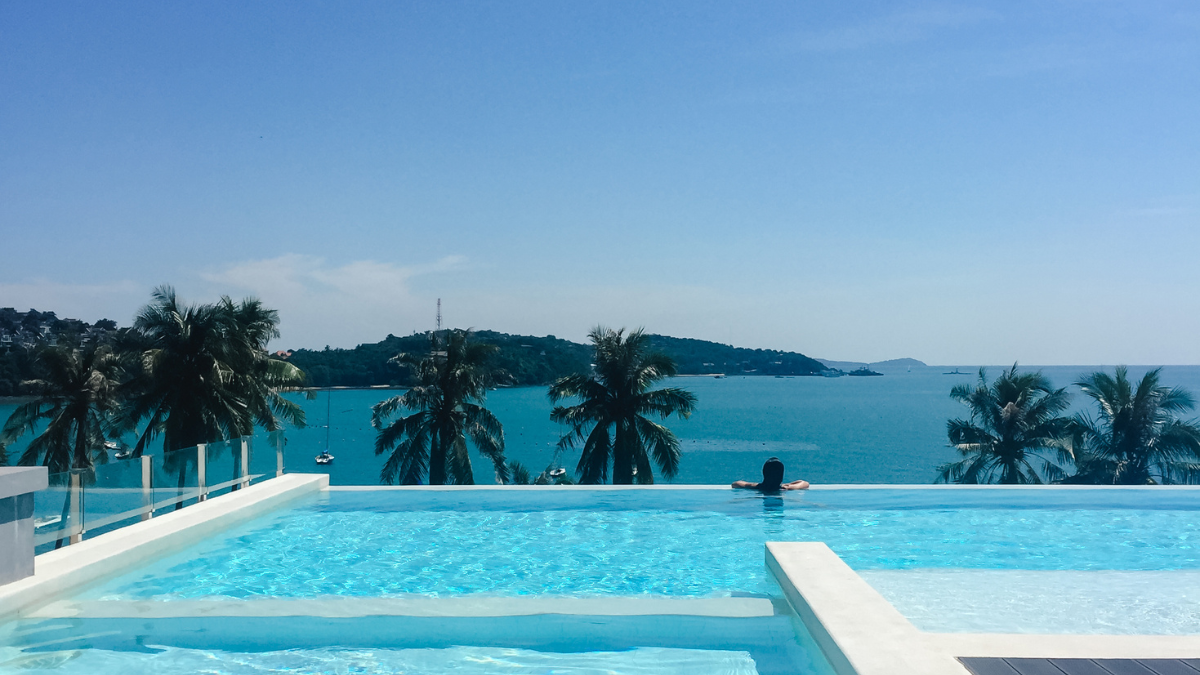
Is there anything more beautiful than enjoying a refreshing dip in a pool of crystal clear waters when the thermometer marks high temperatures? To reach that stage, it is only necessary to complete a few steps, which today are within everyone's reach, and which are easy to resolve.
By Sui color
"The first thing to do in the case of maintenance of a swimming pool that has already been used in other seasons is to empty it completely and clean it in three steps: first with water and muriatic acid, then with water and chlorine and finally with water and detergent. Once the pool is clean and dry, if it is made of concrete or plastered masonry and taking into account that over time they can begin with water leaks, cracks, blisters in the paint and other defects, it must be sanded and scraped and any breaks that may be there must be repaired. If there are cracks and they are not very deep, a silicone-based product can be used for filling and sealing. In the case of deep soils, use specific elastic putty for repair or cement mixed with sealing components. In both cases, the mode of use and drying indicated by the manufacturer must always be respected. The next instance, when the surfaces have been rinsed and allowed to dry, is repainting. It should be done in the morning, once there is no dew, and should last only until noon," explains Guillermo Ortega, manager of the Sui Color network.
The ideal paints for this step should be water-based or solvent-based. Thanks to the possibilities offered by the market today, the range of colours in terms of this type of paint not only includes blue, light blue or white but also includes sand or emerald green, among others. Now, the painting of the pool can be done by hand or through painting machines which are now offered in specialized businesses at affordable prices.
If painting by hand, two coats must be done in total leaving a period of 24 hours between the first and second. An important point is that if it rains between hand, once the rain stops, the accumulated water must be removed from the bottom of the pool, let it dry and then continue with the repainting. Once the pool is completely dry, it must remain 7 days without water. Now, after that week, all that remains is to fill the pool and dive in to enjoy.
"And if you decide to paint with a machine, the procedure will be similar to that of hand painting. In other words, the same steps are followed as before, but the work and its completion will be much faster as well as neater. The painting equipment, in addition to being easy to handle, allows you to save paint since they absorb the paint directly from the 20-liter can so you should not be refilling the roller or carrying the can or bucket of paint everywhere. This is what makes the work more neat since there will be no possibility of paint falling through the entire pool," Ortega continues. Finally, the work will have a better finish, it will be more professional and there will be more neatness on the surface, in addition to the fact that there will be no marks from rollers or brushes. In other words, everything will be painted evenly and easily.
Currently there are some chains and shops dedicated to the sale of paints that also offer this type of machinery as well as comprehensive advice to their buyers. They come in different sizes and prices.
New pools
Very few know that all new pools, except fiberglass ones, must be filled with water between 3 to 6 months before being used. To be able to graph it, this procedure is similar to the "curing" of a new mate and is what allows the alkalinity to be removed from the brand new pool. After that period has elapsed, it must be emptied and proceed to the three cleaning steps mentioned above.
Fiberglass
In the case of fiberglass pools, maintenance is simpler but no less important. Due to chlorine, tartar and sunlight, among others, after approximately 5 to 6 years of use, the fiber deteriorates and acquires porosity. There are paints on the market that are especially suitable for leaving this type of pool again optimal for use.
Not to get burned
You don't need to suffer a burn on the soles of your feet to get to the pool. To avoid this unpleasant sensation, water-based pool linings can be purchased, especially designed to paint the edges of the pools. These products are easy to apply and come in the colors sand and quartz.
"They are made from acrylic emulsions and acrylic styrene and are used to restore, renew and protect tiles and tiles on the edges of pools and solariums. In addition, obviously, he arrives without burns to dive into the pool," concludes Ortega.
It should be noted that all paint shops usually have advisors who help buyers choose the most convenient products to arrive at the summer with the pool ready to enjoy.
Authors: Sui color, more than a painting shop (www.propimat.com.ar)