
These materials offer 100% performance, lower CO2 emissions, 60-70% renewable carbon content and high performance enabled by nature.
By Paint Area
The circular economy is a model that increasingly embraces the world. This implies a sustainable mode of production and consumption that involves the production cycles of various raw materials; among them, those of the coatings industry. Although this area itself does not generate much waste, it is lined by processes such as the generation of volatile organic compounds and with it greenhouse gases.
Hence the search for alternative bio-based raw materials. This translates into the extraction of fossil fuels, used in the development of their materials, replacing it with carbon from renewable sources, such as corn, through a chemical process.
This is explained by Joshua Mauricio Ocampo, Technical Sales Representative of the Coatings Adhesives & Specialties division of Covestro. This polymer producing company maintains its business strategy based on the circular economy and the search for innovative solutions that are directed towards a sustainable future. Hence, it has as a goal for 2025 to invest 80% of its Research and Development (R+D) budget in projects that contribute to the Sustainable Development Goals (SDGs).
In 2021, 54% of the company's R+D project budget met this objective. In this model transition are other companies in order to optimize the use of raw materials, materials, energy and waste for their reincorporation into the production cycle.
Biopolymers, an alternative for industry
"In Mexico we know that the coatings industry has been slowly evolving towards more environmentally friendly technologies such as solvent-based coatings of high solids, water-based systems for wood, lead-free coatings, among others," says the technical representative of Covestro.
The professional emphasizes that polyurethane-based coatings are considered by the market as high performance and highly durable. Hence, they are present in multiple applications: automotive, corrosion protection, industrial flooring, wood and architectural.

"Currently there are already some bio-based products such as polyols, however, hardener or poly-isocyanate was entirely derived from fossil fuels, this being a limitation for the development of polyurethane coatings with a significant percentage of biological base," he says.
In that sense, the company he represents has developed solutions to break this barrier such as bio-based polyisocyanates, which provide a high content of renewable carbon to the system.
One of the great advantages of these polyisocyanates indicated by Ocampo is that their percentage of renewable carbon can be corroborated directly from the finished product by means of quantitative analytical methods. This gives the manufacturer the confidence to label their product with the biobased content according to its formulation and gives the end user the possibility to corroborate it.
How is it possible to measure the biobased content in a coating?
Joshua Mauricio Ocampo, who is a chemical engineer specializing in polymers at the National Polytechnic Institute (IPN), explains that in our Earth's atmosphere there is a proportion of C-14 isotopes that are generated by the incidence of sunlight on carbon atoms and that are present in carbon dioxide molecules.
These same molecules are absorbed by plants in their photosynthesis process, in which they transform CO2 into O2, so plants across the planet contain the same proportion of C-14 isotopes as the atmosphere.
"This ratio of C-14 isotopes decreases over time. For example, an animal species when it dies has the same proportion of C-14 as the atmosphere because it fed on plants or some other animals that did. After approximately 5,700 years, the content of C-14 is reduced by half, and, after 70,000, the content is practically zero, "he says.
"Fossil fuels are materials that have been under the Earth's surface for millions of years, so there is no C-14 in them. With the analysis of C-14 using the ASTM D-6866 method, we can determine the C-14 isotope content in a sample and calculate its percentage of renewable carbon," he adds.
What is the manufacturing process of these biomaterials?
Ocampo points to two manufacturing methods for biobased products: synthesis from biomass (segregated) and biomass balance.
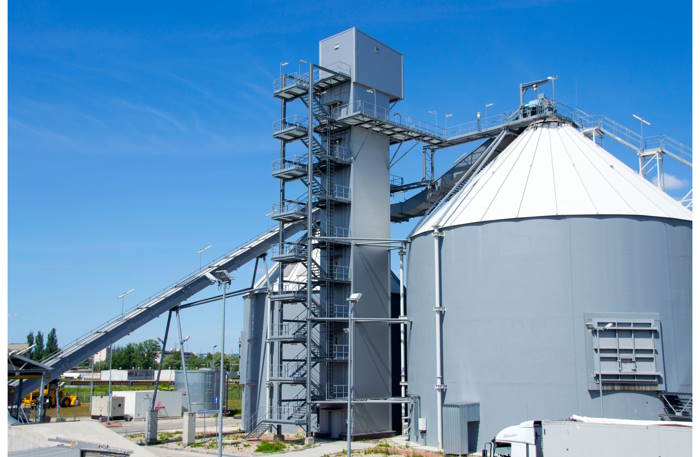
In the first method, the raw materials generated from biomass react by means of chemical-biological processes until a derivative or secondary product is obtained. This allows the fourteenth carbon isotope ratio (C14) to be conserved in the final product.
In the biomass balancing process, basic raw materials derived from renewable carbon are mixed with those derived from fossil fuels from the first synthesis processes and subjected to regular chemical processes, resulting in the loss in the C-14 ratio.
Therefore, manufacturers are forced to use certifications to validate that their material has a renewable carbon content.
"Covestro's bio-based polyisocyanates have shown good performance compared to conventional systems. For example: mechanical properties and similar chemical resistance, improvements in some properties such as drying time and compatibility with polyester resins," says the representative of the Coatings Adhesives & Specialties division.
According to him, these materials will begin to be available in Mexico from 2023 with some innovative projects for the wood industries and the automotive sector, among others.