
 It is worth understanding the birth, evolution and meaning that paintings have for all generations throughout history.
by Julián A. Restrepo R. *
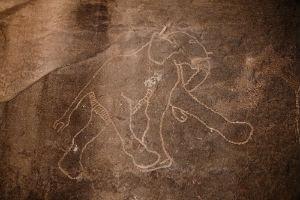
The Magical History of Paintings: From "Rock Art" to the Renaissance. The paintings have represented a significant element in the history of humanity [1], in fact their history goes back to the time when our prehistoric ancestors, in their passage through the world and being captivated by color, a creative spirit and being part of rituals with a high magical content and if you like, Religious, they left embodied in caves, rock walls and natural caverns (which were their home and meeting place), innumerable representations of animals, plants or objects, scenes of daily life, signs and geometric figures, etc. [2,3]1, creating wonderful pictorial works, in what we now call "rock art" or "Paleolithic paintings"2, and which we can admire today, thanks to the fact that being protected from erosion and inclement weather, they have resisted the passing of the centuries.
Before the development of writing, human societies possibly already recorded, through painting and engraving in stone, much of their experiences, thoughts and beliefs. Simply put, these manifestations are a reflection of humanity's intellectual capacity to abstract and represent its reality, and show the important role that paintings have played in this regard.
Archaeologists and scientists have determined that the set of "cave paintings" of the caves of Altamira, the Castle and Tito Bustillo (all in northern Spain), date between 30,000 and 40,000 years old (the most famous being the so-called Great Bison of Altamira), constitute the oldest known rock art in the world [4,5] and being, therefore the oldest known artistic expression of man.
The Sahara is probably the place in the world with the largest collection of rock art. There may be more than 100,000 sites with paintings or engravings in their entirety. They are found in the most inhospitable places and are an invaluable document about the history of the peoples who populated this region for about 12,000 years. The most famous ensemble is located on the plateau of Tassili n'Ajjer (southeastern Algeria), with more than 15,000 engravings and "cave paintings" [6].
On the other hand, other famous "cave paintings" are found in the cave of Lascaux (in the south of France), which are approximately 15,000 years old (the most famous being the so-called Chinese Horse) [7]; while in Latin America there is the so-called Cueva de las manos (south of Argentina) with about 9300 years [8].
But painting has also accompanied man as a visual art in more recent times, where infinite techniques, styles and authors of sublime aesthetic creations of the human race have been used, which fill the art galleries and buildings where the muses live! [2]. Being one of the most magical periods in this sense, the movement of cultural revitalization that was born in Italy and spread to the rest of Europe in the fifteenth and sixteenth centuries, called the Renaissance, which had a great impact on the field of the arts, but which also produced an important renewal in the sciences, accompanied by social and political changes, also having various scientific and geographical discoveries [9,10].
In this period, painters, while dealing with religious subjects, most of them, also introduced mythology, allegory and portraiture into their works. The paintings slowly and progressively abandon the Gothic rigidity and get closer and closer to reality. Nature appears in the backgrounds of the compositions, and nudes are introduced into the figures [10].
The Technical History of Paintings: From "Rock Art" to the Renaissance. The first paintings that man created were prepared exclusively with natural materials, being mostly composed of mixtures of egg, water and various colored earths (natural iron oxides, which when mixed produced a wide variety of colors) [11]; but plant sap, animal blood (and if you want human), cherries and other colored fruits were also used [12].
We can analyze the composition of these prehistoric paintings [11]: An egg consists of: 60% the white, 30% the yolk and 10% the shell; the white, contains a binder of natural origin called albumin (strictly speaking, ovalbumin), the yolk contains (among others, without forgetting the dreaded cholesterol), lecithin (a type of phospholipid), which has emulsifying and moisturizing properties (in other words, it is a type of pigment dispersant), and finally, we must say that those "red and ochre earths" were nothing more than inorganic pigments: natural iron oxides (natural siennae), being dispersed in an aqueous vehicle and various natural plant emanations. That is, these were nothing more than a type of paints that today we classify as water-based (since we have pigment, binder, additives and water as a solvent).
On the other hand, during the Renaissance, commissioned by various medieval artists, the development and use of various pigments and materials was based on an artistic objective (think, for example, of tempera paintings, oil paintings, etc.), and those who sought to obtain a greater liveliness and realism from their works motivated the alchemists (the chemists of yesteryear), to obtain more vivid pigments, although in some cases toxic (based on heavy metals such as lead, mercury, etc.), which led to the early death of many of them during their obtaining, or of painters during their use (some painters used to wet the brush with their lips). Similarly, even in recent times, contamination with radioactive substances used in the formulation of cosmetic products is reported.
Here it is worth mentioning that [13] in 1898, the Curie spouses discovered radium, which is a highly radioactive element that poisons any living being that comes into prolonged contact with it. But back then, there wasn't much information about the effects of radioactivity. Because it glowed in the dark, merchants began to put the radio on different objects for decorative purposes, starting a radioactive fad that affected Paris and to a lesser extent, the rest of the world. For unknown reasons rumors spread that it was an invigorating tonic, and it began to be included in cough medicines, toothpaste, ointments, chocolate bars and suppositories intended to improve sexual ability. It was also used in face creams, lipsticks and makeup, because apparently its brightness gave the face an angelic look highly appreciated by the aristocracy of the twentieth century. They even sold radio water, a vitaminized and radioactive liquid with the hilarious advertising claim: "A cure for the undead."
The first materials and more curiosities
Historically many of the advances in paintings were made by the Egyptians, who introduced a diversity of pigments about 3,000 years ago, using lapis lazuli (blue), zurite (green), red ochre (Fe2O3), yellow ochre (Fe2O3.H2O), gypsum (white), malachite (green) and oropimente (yellow) [12].
Before the Industrial Revolution, the variety of colors available for art and other decorative uses was technically limited. Most of the pigments used were terrestrial pigments and natural minerals, or of biological origin. Pigments from unusual sources such as botanical substances, animal waste, insects and mollusks were also collected and traded. Some colors were difficult or impossible to prepare with the available pigments. Blue and purple were associated with royalty because of their high cost. Biological pigments were usually difficult to acquire, and the details of their production were kept secret by manufacturers [14].
Many pigments, based on minerals and clays, were known by the name of the city or region where they were obtained: Natural sienna and toasted sienna came from Siena, while natural shade and toasted shade came from Umbria (both cities in Italy). These pigments were among the simplest to synthesize, however, chemists have created modern colors based on the originals that are more consistent than colors obtained from mineral origin. Also, many famous natural pigments have been replaced by synthetic pigments, although they have retained their historical names [14].
Scientific discoveries, in terms of colors, created new industries and produced changes in fashion and tastes. The discovery in 1856 of Perkin's purple, the first aniline dye, laid the groundwork for the development of hundreds of synthetic dyes and pigments. This dye was discovered by an 18-year-old English chemist named William Perkin, who exploited his discovery in industry and became rich (though discovered by chance, in his attempt to synthesize quinine, as a remedy against malaria).
The purple and stable dye that Perkin invented would coincidentally bring him to fame for having approached with a modern substance more than anyone else the dye of Tyre [15] (a dye of biological origin, as will be expanded later). Its success attracted a generation of followers, as young scientists entered the field of organic chemistry to obtain similar achievements. So that in the last decades of the nineteenth century, textiles, paints and other items in colors such as red, crimson, blue and purple had become affordable [16].
The development of chemical pigments and dyes helped bring industrial prosperity to Germany and other northern European countries, but caused decline elsewhere. In the former Spanish Empire of the New World, the production of cochineal colors employed thousands of low-paid workers. The Spanish monopoly in this production had been worth a fortune until the early nineteenth century, until the independence movements in America and other changes in trade interrupted production, organic chemistry gave the final blow to the cochineal industry, when chemists created cheap substitutes for carmine, which caused this industry and its lifestyle to plummet [17].
Footer
1. "Rock art" is considered by some to be the most beautiful artistic expression ever created by man, and by various scientists, as the oldest.
2. Strictly speaking, "rock art" is the trace of human activity or images that have been engraved or painted on rocky surfaces [3]. The "rupestre" refers to the support in which it is located (from the Latin rupe: rock). manifestations of human dexterity and thought.
3. We assume that a chicken egg weighs approximately 60 g [11].
References
[1] (a) Welsh, L; Welsh, P., "Rock-art of the Southwest: a Visitor's Companion"; 1st ed., Berkeley, Calif.: Wilderness Press, 2000; p. 62; (b) http://es.wikipedia.org/wiki/Pintura_rupestre (c) http://es.wikipedia.org/wiki/Arte_paleol%C3%ADtico
[2] a) Benzaquén, D., "La Pintura: Un material con historia y magia"; REC Magazine, No. 1, July 2003; pp. 8–12; (b) Brandau, A.H.; "Introduction to Coating Technology"; Ed. FSCT, USA, 1990.
[3] a) Bahn, P., "Prehistoric art". Cambridge Illustrated History, 1998; (b) http://www.rupestreweb.info/introduccion.html
[4] (a) http://www.emol.com/noticias/tecnologia/2012/06/15/545839/cientificos-encuentran-el-arte-rupestre-europeo-mas-antiguo-en-espana.html; (b) http://www.astrologiaparaserfeliz.com/ noticia/2283/Astroflash/el-arte-rupestre-mas-antiguo-del-mundo.html
[5] http://es.wikipedia.org/wiki/Cueva_de_Altamira
[6] http://es.wikipedia.org/wiki/Arte_rupestre_del_Sahara
[7] http://es.wikipedia.org/wiki/Cueva_de_Lascaux
[8] http://es.wikipedia.org/wiki/Cueva_de_las_Manos
[9] http://es.wikipedia.org/wiki/Renacimiento
[10] http://www.profesorenlinea.cl/universalhistoria/RenacimientoCausas.html
[11] Restrepo, J.A., "The Idea of eternal return, part I." Revista Inpralatina, Vol. 17, No. 3, May/June 2012, pp. 37-38.
[12] http://www.alimentacion-sana.com.ar/portal%20nuevo/actualizaciones/huevo.htm
[13] http://www.cirqla.com/modas-grandes-desastres/
[14] http://es.wikipedia.org/wiki/Pigmento
[15] http://labitacoradehumboldt.blogspot.com/2010/11/purpura-de-tiro.html
[16] a) Garfield, S., "Mauve: How One Man Invented a Color That Changed the World". Faber and Faber, 2000; b) Butler Greenfield, A., "A Perfect Red: Empire, Espionage, and the Quest for the Color of Desire". HarperCollins, 2005.
[17] (a) Behan, J., "The Bug That Changed History"; Grand Canyon River Guides; b) Pastoureau, M., "Blue: The History of a Color". Princeton University Press, 2001.
* M.Sc. Ph.D. Julián A. Restrepo R. PMC Technical Manager of PPG Industries Colombia, [email protected]