
 The leaders of two important companies in the chemical and paint sector told their experiences in terms of good management practices aimed at corporate sustainability.
by Duván Chaverra Agudelo
In INPRA LATINA we have recently delved into ecological issues because we are understanding that our industry in particular bets more frequently towards that front, thus assimilating the trend and envisioning a much more environmentally friendly panorama, and of course, much more efficient for products that have to do with the world of paints and coatings. Both aspects are convenient for everyone.
It seems that little by little this trend has much more acceptance by the big brands in the market and for that reason, in recent years they have changed or improved their manufacturing and corporate habits, in order to create a purely sustainable unit that contributes in large size to the protection of the planet and a better quality of life for its employees.
To illustrate this panorama much better, we will present the examples of two international companies with an important presence in Latin America, which testified to this in the last Expo Sostenibilidad, an event on good management practices for corporate sustainability that was recently developed in Medellín, Colombia.
The guests were Santiago Piedrahíta, president of Orbis (formerly known as the World Group), and Andrés Orozco, general manager Colombia of AkzoNobel, who explained what their bets are on ecological issues and exposed where they think the industry is going in the coming years according to their experiences.
In the first instance, Andrés Orozco highlighted the good image that the company he represents in the world has in the sustainable aspect and mentioned the strategy that they have been successfully developing: "AkzoNobel is a company that has been ranked first in the Dow Jones in sustainability for several years; for us sustainability is handled as a business model, since we are a company that moves tons of chemicals in tank cars, and raw materials in ships. From the point of view of business model this forces us to propose a way of working in which we manage to do more by consuming fewer resources, because the carbon footprint that we leave behind what we do or each plant we install is very large".
In addition to the challenge, the general manager of AkzoNobel highlights that the sustainable model also generates different obligations. "We serve four market segments: construction and infrastructure, consumer goods, transport and mobility, and special materials and chemicals, all this poses a challenge today, to do more with less. And these segments are today asking for green buildings; for example, we in that aspect have a 20% share so that the supply is green, but in terms of transport and consumer goods we are not present. Our goal is for part of our sales to come from sustainable solutions."
For his part, Santiago Piedrahíta highlighted the issue of sustainability as a present and a future of the industry. "The organization is convinced that sustainability is not a fad, especially because of the type of industry we are in, because from the strategy it is clear that this issue is fundamental; second, we know that if we don't invest in this there will be no business tomorrow. It is a long-term issue for us, we know that we must continue to build it, since there are a number of external commitments and principles that we have acquired. And there is a third very important factor, and that is that we have a value proposition to the employee to be part of sustainability, giving him the opportunity to grow, to bet on the future and to have the opportunity to impact communities. "
For Santiago Piedrahíta, the development of communities is an important issue within the foundations of sustainability: "We are aware that as a chemical industry, if we do not manage ourselves very well we will be bad neighbors and destroy the environment. We also work a lot with communities, such as the painters' guild, who are within our value chain."
How do you become sustainable?
The proper organization, the creation of viable plans and strategies, in addition to the correct management, facilitate much more the possibilities of achieving sustainability in a company. In the case of AkzoNobel, its director explains how they managed to identify their strengths and achieve the initial goals set.
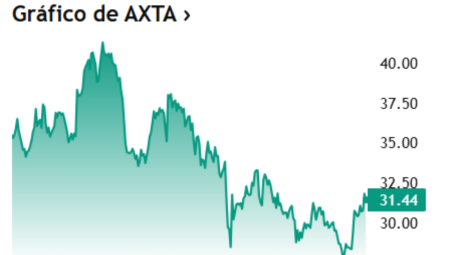
"We cannot reach the local markets from you to you, arguing price issues, so we must bet on innovation and develop solutions that allow the customer to do the same with less and with the best, or that to be competitive in the market we have to comply with specific legislation, which makes the product more expensive. The challenge is to balance the products and differentiate ourselves from companies that do the same. Today we do not reach 12% of total global green sales, but the 'target' for the year 2020 is that 20% of sales come from that class of products. AkzoNobel went from all the raw materials they use such as those derived from petroleum being now based on vegetable oil, starch and natural alcohols," said Andrés Orozco.
Meanwhile, one of the aspects that Orbis has highlighted in sustainability projects has to do with the development of innovation as a great generator of value. "We are investing more than $7 billion pesos a year (about $3.6 billion) in innovation issues, which means about 9% of our annual net profits. About 30% of revenue is represented by products or services developed in the last three years, which means a significant renewal rate."
'It's better to do it than not to'
When thinking about a corporate sustainability project, both executives agree on the idea that this trend is no longer only demanded by government or state entities, but that, even, customers and suppliers are more concerned about the origin of the products they acquire and their manufacture, which forces corporations to modify their strategies towards sustainability.
Santiago Piedrahíta highlights three important aspects in the process of generating the development of sustainability: "Reputational, product or economic risks always exist, but I believe that there are more risks of not doing than of making a sustainable plan, and the main step is to move from the idea of sustainability to concrete actions. In our particular case, what was most important for the real and concrete plans to begin was the study of subject matter, which allowed us to define the fundamental aspects that we had to specify so that a true sustainability strategy was given within the organization. Second, everything has to be measured; third, you have to involve people and engage them in this regard."
Finally, the recommendation made by Andrés Orozco, as a representative of AkzoNobel, is that in aspects related to sustainability, correct advice also plays an important role. "You have to accompany yourself, you have to have a humble attitude and listen, get advice from experts to help you make diagnoses, and then plan, clearly define a north, think about big and ambitious goals thinking about the resources that exist. Shareholders have to understand that a business is not viable in an unviable environment."