
 Smart paints continue to seek to open the way for both the architectural and industrial sectors within a competitive market. Its functions and developments highlight its importance in the segment.
by José Tomás Rojas*
When I started working as a formulator in the Coatings Industry, the definition we used of paints referred to a film that, applied correctly on a certain surface, was able to provide protection and decoration.
Protection referred to the prolongation of the useful life of the material that constituted the surface, mainly metal, wood or masonry. In most cases, the purpose of the barrier was to isolate the surface from the effects of exposure to water; corrosion, in the case of metals, and structural deterioration, in the case of wood and masonry. (See Figure 1 – next page)
Fig. 1 Protection against water by barrier effect.
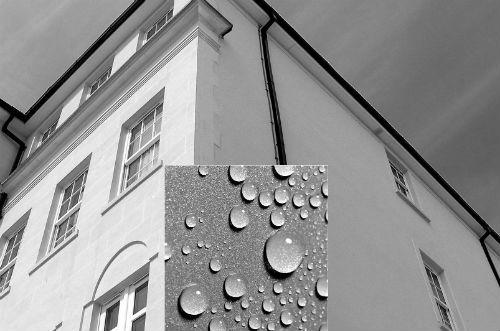
The effectiveness and level of protection of the barrier depends on many factors, including the thickness of the film applied, the type of resin and the presence of anti-corrosion additives.
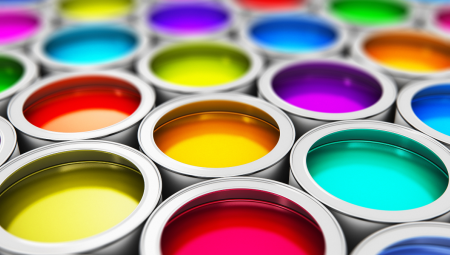
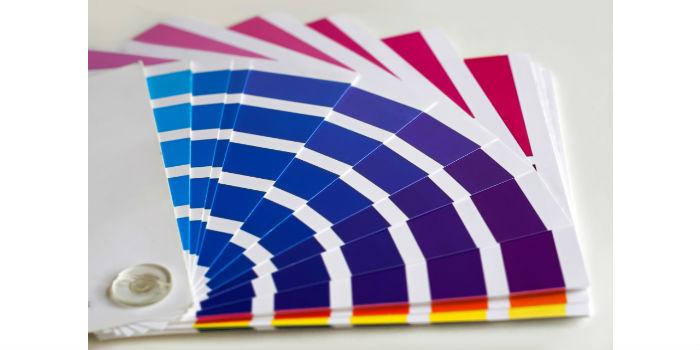
The case of decoration is self-explanatory, and refers to the whole variety of colors and finishes that we can place on the surface to beautify it and to distinguish it. Today there is a huge variety of options, both for the architectural market and for the industrial market. The colors are available ready to use, but the colors are also prepared in store, to the taste of the consumer, with color charts that sometimes exceed 4,000 options.
I have always thought that so many options, far from helping the user, what they do is confuse him, and that is why today many painting companies go to the support of architects and designers to advise the client, suggesting the color combinations that best fit their particular space. The idea is that the color selection process is simple and enjoyable.
Pinturas Inteligentes o Smart Coatings
A third concept known as functionality has been added to the concepts of protection and decoration, which means that the paint film is able to react in a predictable way, to the action of an external stimulus. Hence the term "smart paint", that is, a coating that is able to identify a particular external situation, producing a response accordingly. The stimuli that provoke the response can be a change in pH, temperature changes, mechanical damage to the coating, among others. Let's look at some examples:
Color change
It can be said that the first Smart coatings were paints for risk signaling. When a dangerous gas escapes or the sudden increase in temperature in a metal part, the paint changes color to warn operators about the presence of a danger or a risk condition.
Paints that change color have also been used, with the change of pH. A ceiling paint is alkaline wet and blue in color. When dry, its pH changes, which affects the blue dye that fades, leaving the paint white. It is a well-known principle that has been used for quite some time in acid-base titrations, for example, with phenolphthalein as a dye.
Clean air
The paint is able to react and neutralize chemical compounds present in the environment. The most notorious cases are anti-nicotine and anti-formaldehyde paints. These paints work mainly through neutralization reactions of the Acid/Base type. The case of anti-formaldehyde paints is interesting, since this is a chemical compound that we do not expect to find in a home environment. However, the development arises since in some countries the use of wooden furniture painted with paint systems known as "Acid Catalyzed" has spread. Under certain circumstances, these coatings can generate some formaldehyde, during drying, which can become very dangerous to health, depending on its concentration.
Self Healing
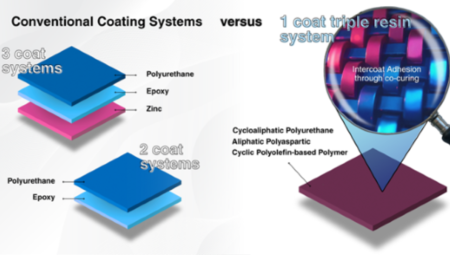
The principle of self-healing paints is based on the fact that during their manufacture encapsulated elements can be incorporated into the paint matrix. In the case of anticorrosive, catalyzed paints, the base resin and the catalyst can be incorporated separately. Thus, in the event of external mechanical damage, the capsules are broken and the resin is put in contact with the catalyst, occurring the reaction and solidification of the system, which replenishes the integrity of the coating (see Figure 2).
Figure 2.
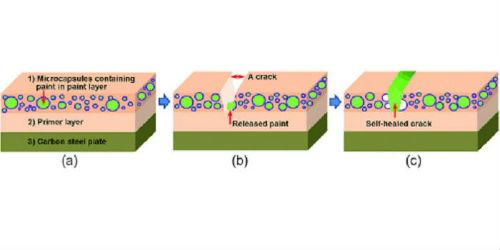
Encapsulation is a very interesting technology because through it many functionalities can be incorporated into the painting. Fragrances, thermosetting resins and antimicrobial agents can be placed, for example, whose release can be programmed, depending on the material that constitutes the capsule.
Future of Smart Paints
In my opinion, incorporating functionality into the paint pursues an objective of differentiation, that is, the technology has reached a certain level of maturity, where brands compete more with pricing and marketing strategies, given the evidence of a similar performance of the products present in the market. Introducing elements of differentiation can give competitive advantages, increasing the profitability of the product thanks to the extra price that the customer would be willing to pay for the new value that has been added. This criterion applies well for industrial paints, in which the attribute to be sold is tangible, that is, the customer can verify that the stripe on his vehicle disappeared or that the color changes with the pH.
In the architectural business it is not so easy. I have commented in other columns on the difficulty of establishing the concept of antimicrobial paints, even though the arguments in favor of these paintings are technologically valid and demonstrable in the laboratory.
Unfortunately, the customer does not have how to validate the attribute, and therefore, is not very willing to pay a higher price for an attribute in which he must believe, but cannot verify, unless the marketing strategy is so effective that it manages to convince him.
How to Introduce Smart Paint technology to the architectural market as a customer-verifiable attribute? Perhaps the answer lies in nanotechnology. Encapsulated nanocomponents could be introduced that, under the influence of an electric field, could cause the color change of the paint (LED Technology), or improve the reception of the WiFi signal, or turn a wall into a touch screen. So many things could happen, but we're already entering the realm of fictional technology, and that's not the idea of this column, at the moment.
* José Tomás Rojas. TROJAS Pinturas, F.P. You can send your comments to the email [email protected]