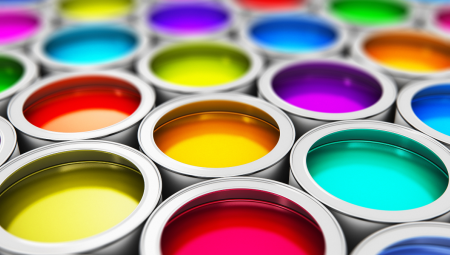

 Companies already devote a large percentage of their developments to paints and coatings with green characteristics. Laboratories are increasingly receiving more modifications to perform these processes.
by Luz Adriana Gómez Ortiz; Tame Aylin; Luis Ize; Heidi Salinas; Ricardo Hernandez; and Beatriz Araujo*
The "green coatings" or "green technologies" are issues that have gained a lot of momentum in the last five years due to all the environmental changes we have experienced and that increasingly impact our quality of life.
A "green coating" is currently not fully defined and can be conceptualized as anything that is modified within a painting or formulation to reduce the effect on the environment and provide energy savings for its final performance. Undoubtedly, in the segment of the paint industry we are facing an unprecedented opportunity to attend to a real commitment to society to not only execute isolated attempts by technology or by product, but to comprehensively understand the process and combine it with the development of clear and well-defined regulations that help us to systematically advance along this path.
At Dow, we have started the journey to sustainability since 1995 where we established our commitment to reduce our carbon footprint by 2005 by creating a culture of safety and operational efficiency that continues to this day. In 2006, our commitment was much more ambitious, focused on expanding efforts so that our products and solutions could support our customers in effectively reducing energy as well as the emission of pollutants into the environment. The definition of goals to continue creating a sustainable path continues with the conviction that we have an important position to influence and advance the path of sustainability [i].
Sustainable solutions for day to day.
In Mexico, Dow has a Technical Service laboratory whose purpose is to provide our customers with comprehensive technological solutions that allow innovation to be compatible with sustainability, integrating local needs and regulations with the technologies generated by our experts around the world.
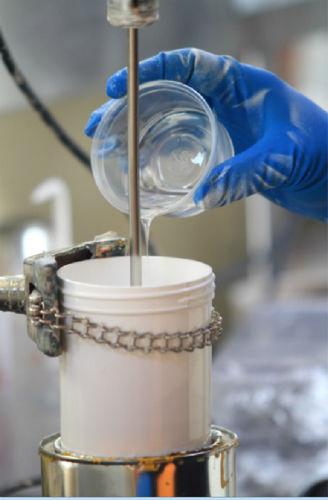
Figure 1. Technical Service Laboratory. Plant in Queretaro, Mexico. Dow
Many countries in Latin America, not just Mexico, are interested in reducing carbon dioxide (CO2) emissions to contribute to reducing global warming. Making the development of highly reflective roof coating compatible with Mexican standards [ii] to achieve formulations adapted to local needs with a contribution to the reduction of the internal temperature of buildings, seeking to avoid overheating of surfaces that leads to an extension of the useful life of the products [iii], is an example of the work carried out in the Querétaro laboratory to generate sustainable innovation.
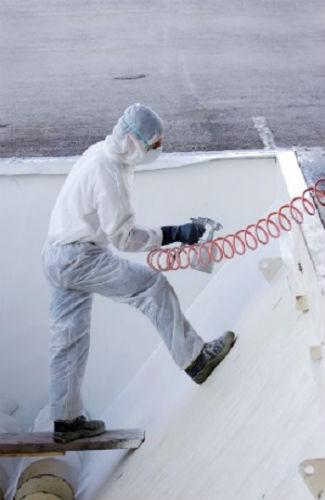
Figure 2. Highly reflective ceilings.
Other examples of green technologies is the introduction to the market of a fast drying technology that facilitates the marking of roads and paths with a potential to reduce up to 80% of Volatile Organic Compound (VOC) emissions compared to traditional solvent-based systems, validated through the product Life Cycle Assessment (LCA1) process where it has been demonstrated that given the durability of the product and the time back from the pathways to use, the potential for reducing the carbon footprint can be up to 60% [iv]. All these values become very important for a Mexican market that is estimated to convert solvent-based technologies to water-based technologies of around 40% of the total potential market in this segment.

Figure 3. Fast drying technology as a sustainable option in horizontal application of roads and highways.
Last but not least, for the large architectural market estimated by ANAFAPYT at just over 335 million liters of paint in 2015, the effort has been directed at creating solutions of greater durability for exterior coatings and odor reduction, through the elimination of formaldehyde in interior paint formulations, in addition to the fact that both approaches consider the reduction of VOC emissions with the use of products aligned to offer solutions to large cities. The creation of solutions of this type is only possible using a broad portfolio of additives and co-solvents selected to complement the comprehensive value proposition.
The greater durability of exterior paints has been addressed mainly with a substantial increase in the resistance to external fouling due to the effect of pollution in large cities, as well as an adaptation of the development of semi-flexible technologies that can adapt to the demands of a cement-based substrate (which undoubtedly represents more than 90% of our market) and that present an interesting challenge regarding flexibility and resistance to efflorescence and alkalinity for the architectural painting system that in addition to providing an adequate aesthetic appearance, must meet a durability of at least 10 years to reduce the number of waste and carbon footprint created by the application of low performance and duration systems.
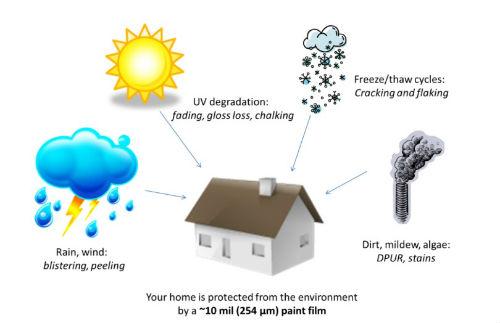
Figure 4. Factors that affect the performance of exterior paints
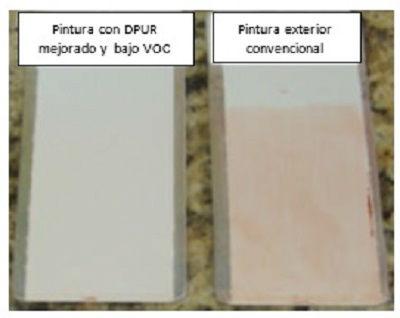
Figure 5. Formulated systems with improved resistance to external fouling (DPUR) and less than 50 g/L of contribution to the VOC.
On the other hand, solutions for the indoor coatings segment such as odor reduction and even pollutant degradation have been a core part of our approach to sustainability for large cities where air quality has become a problem due to the presence of pollutants that can seriously affect health and even trigger allergies such as the presence of formaldehyde. This idea has been confronted through the sum of technologies all aligned to offer the same solution: improve indoor air quality.
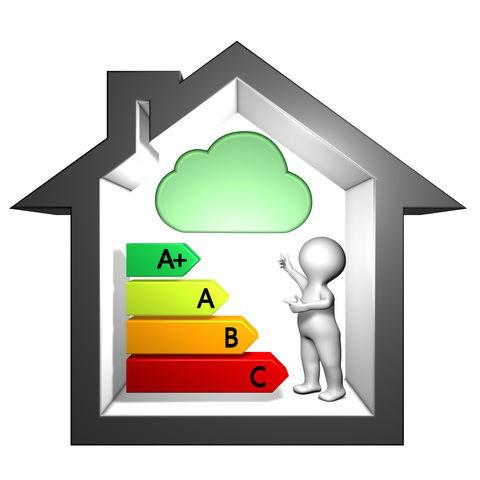
Figure 6. Graphic representation of the sum of technologies that improve indoor air quality in homes in large cities.
By looking at all these examples, we have no doubt that we have begun the path towards understanding the way to formulate paintings through green technologies and we have set ourselves the challenge of continuing to face the commitment to our society. At Dow, we are convinced that using innovation and moving towards valuing nature, keeping integral solutions as part of the answer is essential.
Footer
1. Life Cycle Assesment Process. Conducted according to international standards and validated by a third party.
References
i- Dow 2015 Sustainability Report.
ii – NMX-U-125-SCFI-2015
iii - Herrmanns, C.; Poersch-Panke; Rokowski, J. Reducing Over-heating in Buildings by Use of Cool Reflective Roof Coatings (CRRCs). TechLine 4. For the Construction Industry. The Dow chemical Company and affiliates, Swizerland, Germany, USA.
IV - Dow Coatings Materials. Dow Life Cycle Assesment Sets Direction for Sustainable Road Marking. Philadelphia, PA. March 2013.
* The authors of the article are part of The Dow Chemical Company.