
 The use of solvents with high volatile organic compounds (VOCs) is one of the influential factors why the paints and coatings industry evolves in ecological terms. Professionals explain the reasons.
by Duván Chaverra Agudelo
Everything indicates that the intentions of most companies are very good in modifying the usual standards in the use of organic solvents in the paints and coatings industry in order to offer more environmentally friendly products such as water-based paints.
However, the big picture shows that our sector consumes almost 50% of the solvents used in the chemical industry (See Figure 1). But the hope that in the near future this situation can change remains valid. Experts say that it is very possible that the consumption of this chemical will decrease, but not in the way expected.
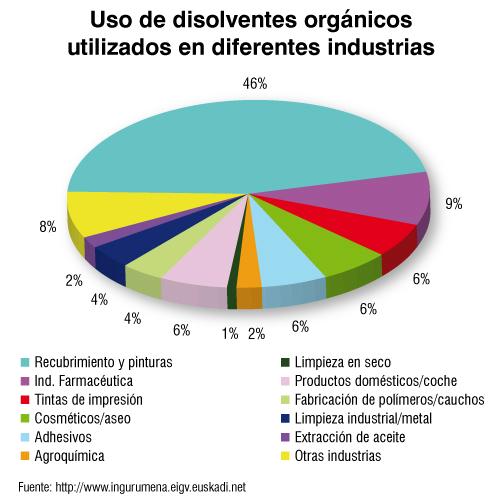
In our markets this has an explanation: the constant emergence of small industries focused on the generation of solvent-based products, and another more important stumbling block, the application of regulations that monitor the content of solvents in paints.
Jaime Baldeón, coordinator of new product development of CPPQ S.A. of Peru, commented in this regard that "this delay is linked to the awareness of people and companies; for example, in the architectural sector of Peru there is no specific awareness of what polluting paints are, still the consumer is looking for products that are cheaper, but polluting. In addition, in our country there are also no regulations on the content of VOC, which means that there are unscrupulous manufacturers who only aim to sell and offer cheap products."
Hence the importance of the role that companies must play in this aspect, since these are the most important influence within a chain that has as its last link the generation of awareness and responsibility in the consumers of the products that concern us.
Julián Restrepo, from the technical marketing department at Insucolor, indicated that companies must play an active role in order to raise awareness about the risks related to the use of solvents and their impact on the environment. "In addition to the environmental problem they cause, we must bear in mind that solvents are flammable substances, so they have a fire risk both in their manufacture and use."
Likewise, the guest stressed that several factors must be taken into account that determine the decrease in contamination in paints, which should not always be measured in terms of a smaller amount of solvent.
"If products with smaller amounts of solvent are offered, but in the production of these higher expenses are incurred in energy terms (in other words, energy expenditure, fuels and CO2 generation), it will be difficult to discern the difference in the environmental impact of one product and another. In addition, the offer of a product with a low content of polluting materials, but that presents a lower performance than solvent-based products, obviously makes the analysis more complex, since a lower performance of a coating only leads to an increase in maintenance schemes. This complex balance can be solved by carrying out a Life Cycle Analysis," said Julián.
Architectural development?
The development of this segment, due to the constant demand and increase in sectors such as construction, have led manufacturers to generate content with lower amounts of VOCs, there is also an important positioning in the emulsion industry, where these resins are manufactured to 50% solids using water as a solvent. This has made a water-based paint has managed to reduce seven times the content of organic solvents in its preparation.
However, the representative of Insucolor also emphasizes that the development of architectural paintings has not had significant advances in recent times. "They still continue to use organic solvents, and I think they should already be at too low levels, because we still use coalescing agents, glycols and other volatile components in the formulation, since the resins used require this type of agents for proper film formation. Although the concepts of 'self-cross-linking' resins, reactive coalescing, exempt coalescing, etc. already exist, their use is not widespread enough, perhaps, because of the associated costs."
For his part, Jaime Baldeón highlights that in his country there has been a positive evolution within the marine market in terms of the use of organic solvents in coatings. "In the industrial sector, referring to the marine, there is a current awareness about the use of polluting products, and within the specifications they require that they do not have a high content of solvents; currently, a paint must have an 80% solids content, and that they do not include chromate or lead, which means that at least in this sector there is already an awareness of what self-sustaining products are."
What about regulations?
There are several factors that our guests highlight to explain the weakness in the regulations that limit and monitor the use of paints with high VOC content. For example, who represents CPPQ said that, although the industry has pressured the government to create internal regulations, the issue "is linked to the awareness of people and companies, in Peru there is no specific awareness of what are polluting paints; the consumer is still looking for products that are cheaper regardless of specifications, and there are also no regulations on VOC content, which leads to unscrupulous manufacturers that only aim to sell and offer cheap products."
To paraphrase Julián Restrepo, another important issue to highlight is the cultural one, which influences in a certain way, especially because in our region we tend to wait for what the most developed countries do in order to adapt to the new technological proposals, in addition to receiving from companies the products that in other countries were already limited by pollution or low environmental standards.
In addition, the guest highlights another point that few of us consider: "It is important to keep in mind that even our countries have a 'relatively healthy' environment, compared to the countries with the greatest technological advancement. This is based on the fact that we still have an abundance of water resources, forests, flora and fauna, which gives us a false sense of environmental well-being, since pollution, apparently, is not as serious a problem as in nations with higher levels of emissions, in this case, soda."
Finally, surely each of you has your own opinion on the present of VOCs in the manufacture and subsequent commercialization of paints in Latin America. What this article allowed us to analyze is that there are great intentions in using coatings with better environmental and performance performance, but still, factors such as price, culture, regulations and trade with the most developed countries prevent our region from advancing at a faster pace. There are intentions of certain sectors to use greener mechanisms, but there is still a long way to go to reach a break-even point.
To highlight
The alternatives
The following are some of the alternatives recommended by Julián Restrepo, technical marketing at Insucolor. To replace solvents with high VOC content:
- Organic water-based paints: contain less than 10% solvent by weight.
- Mineral paints or inorganic water-based paints: they can be practically free of organic solvents.
- Paints of high solids: they go from 50% solids to values even above 75% by weight.
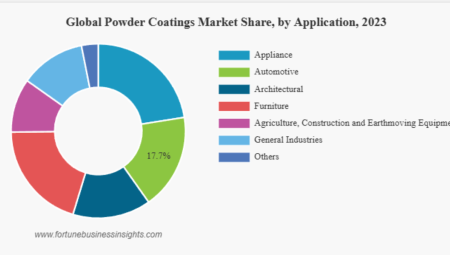
- Powder coatings: they are free of organic solvents.
- UV curing paints: they can be solid or liquid, but they are free of solvents and cure by the action of UV rays
- Paints that use free solvents: in this case these are conventional paints, seeking to have a high content of solids but using less toxic solvents than conventional ones.
- Paints that use alternative solvents, paints that use solvents such as "green solvents" (derived from renewable or simply less toxic resources), diluents and reactive coalescing, among others.