

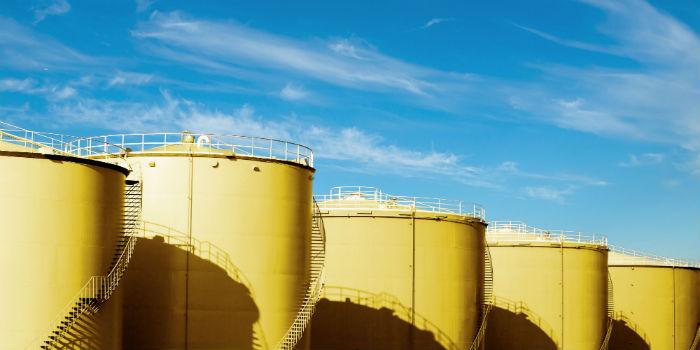
 Tanks are structures that require the application of the best existing anticorrosive solutions and thus prevent damage to their surfaces and extend their useful life.
by Alfredo Enrique Recinos Montes*
The corrosion of structures is a problem that generates millionaire losses in all industrial sectors. So far, there are no products capable of stopping or preventing metal oxidation, but what we have achieved in PPG, is to delay the degradation process of metals by innovating in the development of our anticorrosive coatings, giving surfaces a much longer service life.
Both innovation and protection are challenges of great importance that the paints and coatings industry is currently facing, and in which PPG has taken a strong lead.
This same trend has also given clear signals towards the restriction on the use of certain substances in the manufacture of anticorrosive products and corrosion inhibitors in general.
It also requires - mainly due to globalization - to obtain certifications and comply with international standards; both for products, as well as for production plants, process and storage areas. These currents must lead us, as an industry, to develop, innovate and offer products that provide truly effective and quality solutions.
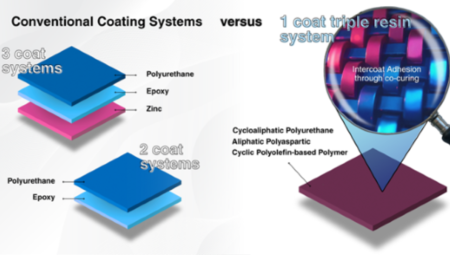
Under these premises, PPG has developed protective barriers capable of reducing and eliminating the contact of chemicals, moisture and oxygen with basic surfaces, also reducing application times. The latter is an indispensable factor to consider during the maintenance process, since it is possible to translate it directly into economic benefits.
And it is that the technology of anticorrosive products has been evolving. In the beginning, its anticorrosive power was based only on the use of hydrocarbon solvent-based products derived from petroleum and with pigments based on lead and chromates, which inhibit the corrosion process, but both are carcinogenic and non-biodegradable materials, not excretable by humans.
At present, the market offers us anticorrosives that are primers and, in turn, serve for the final finish. Technology has been migrating to water-based products, to be less polluting and friendly to the environment and maintain a performance, similar or superior, to traditional solvent-based anticorrosives, complying with environmental laws such as MPI and LEED, among others.
In turn, lead pigments and chromates have been removed by most manufacturers. Instead, excellent quality anticorrosives include pigmentation of iron oxides and zinc phosphate, which inhibits the corrosion process and gives it longer protection time on the iron or steel surfaces where they are applied, such as the Sigma universal primary 28 of the SIGMA brand of PPG. Also the new industrial anticorrosives can contain micaceous iron oxide, a metallic pigment of laminar shape that provides greater protection by barrier to the infiltration of moisture towards the surface that protects, as is, for example, the Sigmafast 278 of the SIGMA brand.
There are anticorrosives by barrier, given their structure of loads and resins, which exert a barrier for the passage of moisture and electrolytes found in the environment, such as the line of primary alkalic anticorrosives of the Glidden brand or the Pimex line of the Comex brand.
Today the industry has also managed to develop galvanic protection anticorrosives with high content of zinc metallic pigment, which are applied directly to the iron or steel surface, after a surface preparation with abrasive jet at a minimum level Sa2 1⁄2 (SSPC-SP 10), such as the Dimetcote 9 anticorrosives of the Amercoat line, Sigmazinc 158 of the Sigma line and ZR-20 of the CIC line all of PPG, providing galvanic protection as a sacrificial anode, to protect the steel in very corrosive C5M environments according to ISO 12944.
How to choose the right system?
The first step is to make a diagnosis of the environmental conditions, pollution and abrasion that affect the surface to be covered or protected, with the aim of classifying the environment in which it is exposed or will be exposed. On interior surfaces, the contents of the tank, the temperature, the chemical aggressiveness of its contents and the pH will be evaluated. For tanks outdoors, we must take into account whether the environment is marine, marine industrial, rural or industrial.
The condition should also be evaluated according to:
(a) if it is a new surface, if it is made of iron, steel, aluminium, or zinc-coated;
b) if it is an old surface, previously painted, it will be necessary to identify the type of finish, state in which it is and compatibility with the new anticorrosive to be applied.
Once these requirements have been defined, you can choose the products that adapt to the conditions in which it is going to be applied: if it is outside or inside, if it is at height with strong winds and, of course, the right type of equipment to move and apply the anticorrosive.
Maintenance
Although the choice of anticorrosive is correct, it is necessary to review the most critical and susceptible areas and areas to corrosion to prevent possible premature failures that will eventually have very high maintenance and repair costs for any company.
Then it is necessary to periodically review details such as screws, corners, edges, joints between two dissimilar metals in the welds. Then the condition of the applied film should be checked, checking for corrosion points or blisters, to carry out repairs by patching.
Finally, it is highly recommended to apply a finishing layer to the base anticorrosive, if the anticorrosive is not designed to be exposed to the elements.
* Alfredo Enrique Recinos Montes* Ingeniería y Desarrollo de Negocios de Centroamérica para PPG LATAM





Alvaro.
Favor confirmar mi existencia en INPRA.