
 The structures undergo various types of aging and to counteract this phenomenon there are ideal techniques and products that increase the life of the pieces.
by Juan Manuel Álvarez*
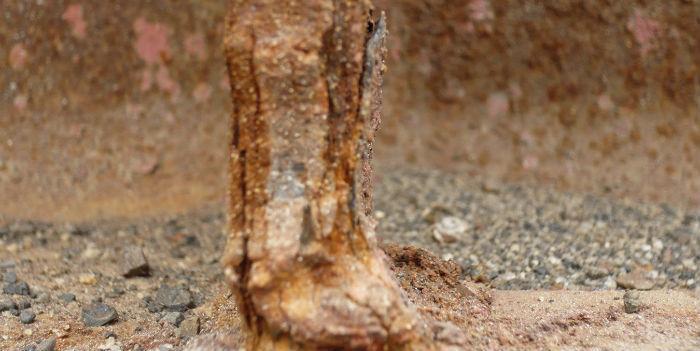
Aging is related to issues such as fatigue and corrosion, both of which involve the loss of material properties. On the one hand fatigue refers to the loss of mechanical properties due to the effect of accumulation of stresses during the useful life of the material or structure, and on the other hand the corrosion process generates loss of properties as a result of the degradation of the material by oxidation.
Seen from another angle, aging is the result of affecting the properties of materials or structures, especially those required in the selection of materials and structural design, affectation generated by fatigue conditions (non-reactive), and by the formation of corrosion products (reactive).
Therefore, the issue of aging is in itself a process, resulting from the synergy of the affectations given by reactive and non-reactive conditions of materials and structures.
Materials can be assessed under "controlled" conditions, to estimate their fatigue life and determine approximately the number of life cycles that a given material can withstand before failing. This valuation can be achieved in different efforts according to the valuation interest for structural applications.
The simulations carried out in laboratories attest to their research to the extent that in the technical sheets of the materials you can find the results obtained from the fatigue life of a material, and that they are supplied by production batch.
Similarly, materials can be evaluated under "controlled" conditions, to estimate their corrosion life in specific environments, materials that end up being "ordered" by their reactivity for the formation of corrosion products in tables such as galvanic series, which are commonly consulted for material selection purposes according to the environment to which the material or structure will be exposed.
Tests carried out in a wet chamber or saline chamber are some of the examples through which, by environmental simulation, the behavior of a material in a specific environment can be determined. Moreover, different cycles can be generated or programmed, so that the environmental or climatic changes that occur on a day-to-day basis are simulated in the most real way possible, in order to predict the behavior of a material through accelerated tests, and thus estimate the useful life in relation to the formation of corrosion products as a result of the corrosion rate to which a material responds.
Thus, aging is a process through which the behavior of a material can be predicted, and which can be achieved by performing accelerated (simulated) tests in such a way that its useful life can be estimated for material selection criteria.
Technology at the service of our work
Today there are aging programs, and software for aging monitoring that handled correctly help to generate greater reliability and safety during the useful life of a material or structure, judiciously interpreting the accumulated information of the material or structure from the point of view of the trend based on statistics.
An application regarding the issue of the aging of structures and materials is the estimation of the remaining time of use of a material or structure through retrospective vision (log) related to the statistical study and monitoring of concepts such as reparability, maintenance, evaluation of results of periodic and non-periodic inspections, environmental variability and service parameters met by materials or structures, that after the analysis allow to generate the trend of the affectation of the properties of the materials and structures.
Materials are valued as individual elements and structures as sets or assemblies.
When the purpose of the aging program is to assess the materials, criteria are used that correspond to the production, treatments, storage, repairability and individual reliability of the material.
On the other hand, when the purpose of the aging program is to assess the structures, criteria are used that correspond to the assembly, the specific rigidity, the specific stability and the reliability provided by the different elements and components that make it up.
For example, assemblies can be achieved with mechanical fasteners (rivets, bolts, and others) which involves taking into account the compatibility of materials (galvanic concept related to the corrosion process), and with the difference in fatigue life for a specific effort with respect to the other elements or structural components.
Assemblies can also be achieved with welded joints where not only the resistance of the contribution material intervenes as a material selection criterion, but today it is of vital importance to comply with the plans generated by the structural engineer, where through symbols determines the shape, technique and finish that must be given to the welding by the qualified welder, so that the best result is obtained in terms of reliability, safety and resistance, both mechanical and environmental or to corrosion.
All of the above can be complemented by products that contribute in terms of useful life, to achieve a good aging of materials or structures.
These products are paints, inhibitors, coatings, metal or ceramic coatings (according to the service temperature) that can be applied on materials and / or structures to protect them from environmental or climatic attacks, which may induce prematurely to generate corrosion products, thus affecting the useful life of the material or structure, accelerating its aging process and shortening its useful or service life.
Based on the above we can say that there is natural aging, induced aging, and controlled or programmed aging as a result of monitoring in which the remaining useful life of a material or structure can be estimated under conditions of reliability and safety.
Note: The following article will deal with the topic "aging criteria" which will give continuity to this topic that currently covers different connotations and is treated under different terms and contexts.
As always I wish you a good aging and many successes in your work.
* Juan Manuel Álvarez is a Consulting Member of the technical committees of NACE International, Member of A.S.T.M, of ACICOR (Colombian Association of Corrosion Engineers), of ASCOR (Colombian Association of Corrosion and Protection), of ACOSEND (Colombian Association of Welding and Non-Destructive Testing), of ICONTEC (Colombian Institute of Technical Standards), of the technical committees of END, Welding, Coatings, Fuels and others. He is also a university professor, lecturer and specialist in metal structures and composite materials. Advisory Services, Audits, Training and Contracts for the Control and Prevention of Corrosion. You can write to the e-mail: [email protected]