
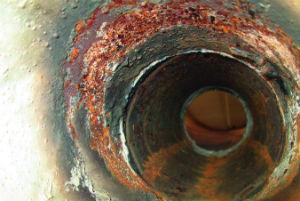
 Humidity, temperature, pH, pressure, mechanical work, vectors, are factors to be taken into account in the corrosion titration work process.
by Juan Manuel Álvarez*
In the assessment of corrosion, the work parameters that in themselves make up the specifications in which the materials, components and structures must comply day by day with the requirements for which they are intended must be taken into account.
Requirements for which the materials were selected under the design principle. Requirements that as a component or structure must fully comply with the concepts of resistance and durability.
Thus, the working parameters are as follows:
- Humidity.
- The temperature.
- The pH or chemical assessment of the environment.
- Atmospheric or working pressure.
- Mechanical work.
- Vectors.
- Humidity
Moisture itself is the electrolyte which is a fundamental part of the electrochemical circuit that regulates most types of corrosion. The humidity factor must be considered from the design principles, due to the effects of runoff, splashes, apozamientos, and of course for its ability to react or dissolve that will finally affect the materials and also the different corrosion control mechanisms, since humidity will determine the durability of these systems.
Temperature
Temperature from the point of view of corrosion titration should be understood as the catalyst that regulates the reaction rates in the formation of corrosion; temperatures that have to establish the difference between those that are related to or are part of the product application processes, reaction temperatures in the formation of protective products, drying temperatures, ambient temperatures specific to the place where the materials or structures will be exposed; and the service temperatures at which the materials, components and structures will be exposed through the time in which the work is to be carried out, which by design and under the operating conditions must be met as durability.
The pH or chemical assessment of the environment
The pH or assessment of the environment will determine the reactivity with the materials or structures for the formation of corrosion products, which is why in the assessment process the pH should be taken as a starting point for research or diagnosis for the determination of its origin qualitatively or quantitatively. The determination of the anions present or dissolved in the environment or in the electrolyte will be what makes part of this parameter.
Atmospheric pressure
As for pressure, the atmospheric pressure and working pressure should be considered. For example; atmospheric pressure should be taken into account when effects of altitude or depth modify the conditions of reaction, dilution or stability of products. While the working pressure has to do with the transport pressure of a fluid that will influence the type of corrosion that occurs, this type of pressure in cyclic or non-cyclic form will affect the very life of the materials and of course the reactivity of the material by dilution or reactivity, even more so in aging conditions.
Mechanical work
The mechanical work seen as a work parameter in the assessment of corrosion is important since some of the types of corrosion are related or conditioned to the presence or fulfillment of different mechanical work. Cyclic or non-cyclic behaviors establish very specific types of corrosion, the behaviors of materials if they are under static or dynamic conditions will make the difference in terms of their affectation in the formation of corrosion. The assessment of this parameter is then decisive in relation to fatigue and aging criteria that of course allow materials, components or structures to be more reactive or susceptible.
Vectors
Finally, vectors are understood, for example, the fluids that carry information related to conditions to determine reactivity in the formation of corrosion. The vectors that transport anion-generating chemicals will be part of the reactivity for the formation of corrosion, vectors that can also transport temperature, which generates increase or loss of heat to the reactive surface (material), or transporting other of the aforementioned variables, such as pressure and humidity, since the modification of the concentration of an electrolyte changes the reactive conditions.
For all the above, it is of the utmost importance to take into account, estimate or assess each of the work parameters to establish the direct impact on the formation of corrosion products and thus direct the investigation or diagnosis to relate the relevant recommendations or corrections.
The work parameters are related to the aggressiveness of the different existing variables, such as thermodynamics, through which the work environment is valued.
The next article will deal with another topic related to the "valuation of corrosion" such as the "Product, process or corrosion control technique applied in the structure originally", which will aim to preserve materials, components or structures in compliance with the concepts of resistance and durability.
As always I wish you a good aging and many successes in your work.
* Juan Manuel Álvarez is a Consulting Member of the technical committees of NACE International, Member of A.S.T.M, of ACICOR (Colombian Association of Corrosion Engineers), of ASCOR (Colombian Association of Corrosion and Protection), of ACOSEND (Colombian Association of Welding and Non-Destructive Testing), of ICONTEC (Colombian Institute of Technical Standards), of the technical committees of END, Welding, Coatings, Fuels and others. He is also a university professor and lecturer. You can write to the e-mail: [email protected]