
 Argentina. Researchers from the National University of Litoral (UNL) are studying in the laboratory a special wall covering that takes advantage of artificial light to clean up environments. The key is the use of a special compound called titanium dioxide modified with other elements.
"They are starting to use a lot, especially in Europe, building materials combined with some semiconductor, which most of the time is titanium dioxide. This material can be combined with concrete, plaster or paints to achieve air decontamination," said Milagros Ballari, who works on the subject with Federico Salvadores at the Institute of Technological Development for the Chemical Industry (INTEC).
In a previous work, Ballari studied the decontamination of the air of a street in Holland, for which he used the same compound that was activated by the action of sunlight: "We thought of applying the same technology to decontaminate air from indoor environments. The drawback is that in those places there is no availability of ultraviolet radiation. Therefore, we had to resort to combining titanium dioxide with other compounds that extend the absorption band to regions of visible radiation," he continued.
According to him, a good way to use the decontaminating properties of this modified titanium dioxide is through its combination with the interior paints that are used to give the final finish to the walls.
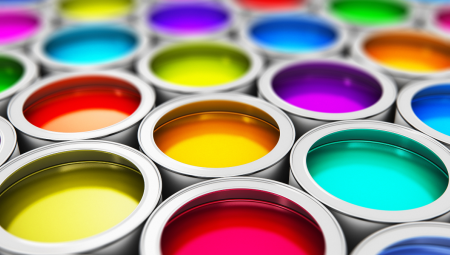
"We made the paint from scratch based on a resin that is used in the interior paint industry. In addition, we replace the titanium dioxide that brings the factory paint as a pigment with one combined with carbon, which is activated under visible light and has oxidizing power to decontaminate the air of acetaldehyde, present in plastics and lacquers, "said Salvadores.
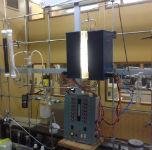
The work is still in the laboratory testing stage, with good results. "We worked in a reactor, a small enclosure where we inserted a plate coated with paint. There we radiate light with fluorescent lamps and feed it with a stream of air mixed with the pollutant. We take samples by measuring what concentrations of acetaldehyde are coming in and out after passing through the plate. The percentage of degradation in the reactor reaches up to 60 percent, something that depends on the humidity of the air and the characteristics of titanium dioxide, among other variables," Salvadores continued.