
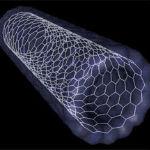
 International. A team of researchers from Purdue University and the Indian Institute of Technology in Madras has found that when the paper used for collecting a sample was coated with carbon nanotubes, the required voltage was reduced 1,000 times, the signal was sharpened and the team was able to capture many more delicate molecules.
"This is a big step in our efforts to create miniature portable mass spectrometers for the field," said R. Graham Cooks, Purdue Distinguished Professor of Chemistry. The dramatic decrease in the power required means a reduction in battery size and in the costs of conducting experiments. The whole system is becoming lighter and cheaper, which includes making it much closer to being viable for easy and widespread use."
"Mass spectrometry is a fantastic tool, but it's not yet on the table of every doctor or in the pocket of agricultural inspectors and security guards. Great techniques have been developed, but we have to fine-tune tools that are affordable, can be manufactured efficiently and are easy to use," explained Thalappil Pradeep, a professor of chemistry at the Indian Institute of Technology in Madras.
The Study funded by the National Science Foundation uses an analysis technique called PaperSpray ionization. The technique is based on a sample obtained by cleaning an object or placing a drop of liquid on the wet paper with a solvent to capture debris from the surface of the object.
A small triangle is cut from the paper and placed in a special accessory of the mass spectrometer, where a voltage is applied. The voltage creates an electric field that converts the mixture of solvent and waste into fine droplets containing ionized molecules that appear outside and are sucked into the mass spectrometer for analysis. The mass spectrometer then identifies the ionized molecules in the sample by their mass.