
 International. The U.S. Oak Ridge National Laboratory is developing a transparent self-cleaning coating for solar reflectors, which improves energy efficiency while reducing maintenance costs and avoiding negative environmental impacts.
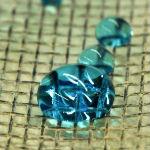
The development is based on a superhydrophobic coating technology that has been demonstrated in water, viscous liquids and more solid particles. Unlike other superhydrophobic methods that employ vacuum deposition and chemical attack on desired nano-engineer surfaces, coatings are deposited by conventional spray and paint methods using a mixture of organic compounds and particles. In addition, these methods can be easily implemented in the field during repairs and retrofits.
The accumulation of dust and sand - in solar reflectors and photovoltaic cells - is one of the main causes of deficiency of solar power plants, capable of reducing reflectivity by up to 50% in 14 days.
Although plants can perform manual cleaning and brush them with deionized water and detergent, this labor-intensive routine significantly increases operation and maintenance costs, which is reflected in the cost of solar energy for consumers.
To achieve proper development, first of all, the coating must be very superhydrophobic, to minimize the need for occasional cleaning, and must have a minimal (or even zero) effect on the transmission and dispersion of solar radiation between wavelengths from 250 to 3000 nm.
To meet these requirements, the coating must be no more than a few hundred nanometers thick, and the embedded particles must be considerably smaller. The extremely thin layer must also be durable under exposure to the environment, including UV radiation and sand erosion, and obey current emission standards.