
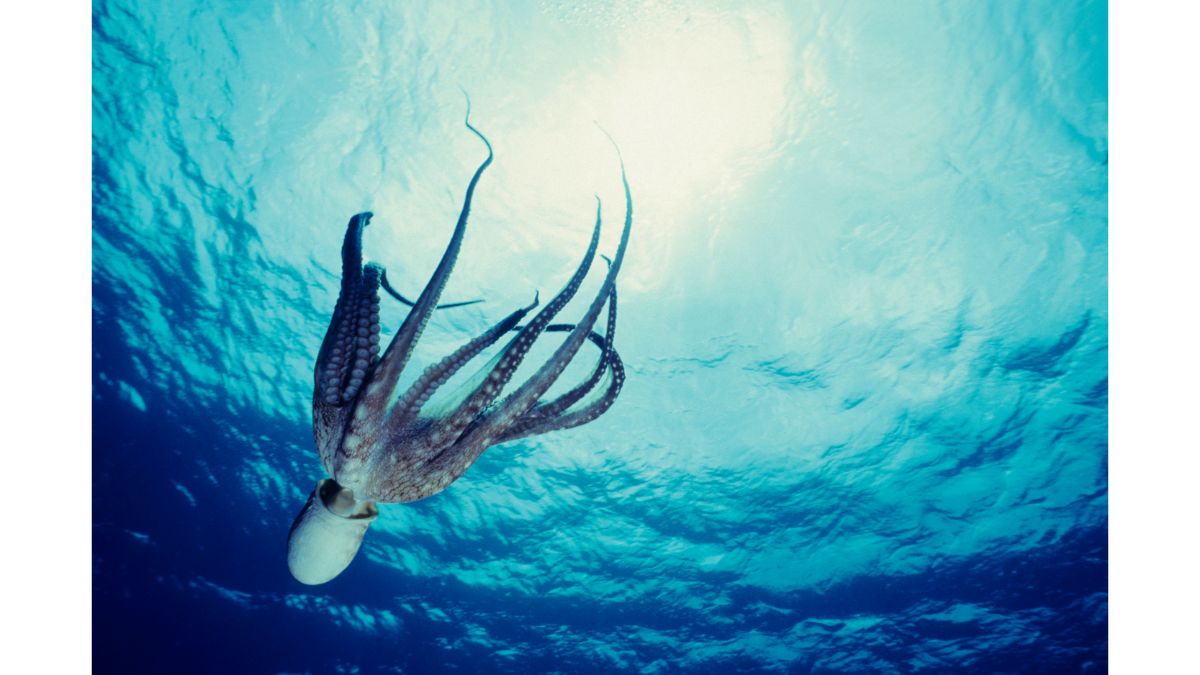
International. Researchers at Northeastern University's Kostas Research Institute are working with a synthesized version of xanthomatin, a natural dye present in the bodies of cephalopods such as octopuses and squid, to create dyes that change in response to different stimuli.
His latest discovery is to use this to create paint that can change color when exposed to light.
Cephalopods change color rapidly in response to threats or even simply change light thanks to xanthomatin.
KRI focuses its work on interesting components of natural materials, looking for ways to replicate and use those components in the real world. Cephalopods have been a starting point because of the unique nature of their skin.
"Its color change is so fast, so vibrant and so intense," said Cassandra Martin, a research scientist at the institute.
"There aren't many natural systems that change that fast and there aren't many materials that change color that are so fast without requiring a lot of external (changes)," he said.
KRI's staff has long worked to replicate this. Previously, the lab used this to create wearable patches that change color when the user gets too much sun. The team wanted to try and find a way to manufacture a material where this change could be reversed to return the material to its original color.
Kaitlyn Flynn, Ph.D. A chemistry student at Northeastern University and the team discovered that titanium dioxide served as a conductor for color change. Mixing different amounts with xanthomatin might speed up the change or increase the intensity of the color change.
Changes can occur in as little as five minutes and can last up to 24 hours, depending on how long the paint is exposed to light. The colorant can be easily prepared in as little as two hours and added to water- or oil-based paints.
Eco-friendly alternative to current paints
"We've envisioned a scenario where, if you want to have day-to-day changing art on an interior wall, like maybe in a coffee shop or something, you could use a regular projector to project a pattern onto the wall, temporarily paint in this color and this pattern or this art, and then over time, it fades away and you can redo it again, ideally as many times as you want," said Dan Wilson, a senior research scientist at the Kostas Research Institute.
"We can create temporary artwork, art, or painting that could potentially track the climate or the environment you're in," Wilson added.
In addition to the ability to create temporary art, this discovery has environmental implications. It can serve as an eco-friendly alternative to paints currently on the market.
Harmful Chemicals in Paints
"Paints that are used commercially today can contain harmful chemicals, so they can have things in them that can be harmful to the people who paint them," Flynn said. "Vapors can be very harmful. They can be harmful in the long run if you're exposed to them for a long time."
"They can also leach into the environment. Finding a more natural way to make these paints creates a safer environment for the people who use them and for the people who will be exposed to them," Flynn added.
In the future, Flynn and Martin said they hope to be able to apply this system to other materials and expand beyond the yellow-red color palette they used in the initial experiment. They also hope to get to the point where the user can decide how quickly they want the paint colors to change.