
United States. Stanford University scientists invent a new type of paint that can keep homes and other buildings cooler in summer and warmer in winter, significantly reducing energy use, costs and greenhouse gas emissions.
Space heating and cooling accounts for around 13% of global energy use and around 11% of greenhouse gas emissions. The new paints reduced the energy used for heating by about 36 percent in experiments in cold, man-made environments. They reduced the energy needed to cool by almost 21% under artificial heat conditions.
In simulations of a typical mid-rise apartment building in different climate zones in the United States with new paint on exterior walls and ceilings, total energy use for heating, ventilation and air conditioning decreased by 7.4% over the course of a year.
"Energy and emissions from heating are expected to continue to decline due to advances in energy efficiency, but the use of air conditioning is increasing, especially in developing economies in a warming world," said Yi Cui, professor of materials science and engineering, energy sciences and photon engineering and science at SLAC National Accelerator Laboratory.
"For both heating and air conditioning, we must reduce energy and emissions globally to reach our zero-emissions goals," said Cui, who directs the Precourt Institute for Energy and the Sustainability Accelerator, both within Stanford's Doerr School of Sustainability.
"More and more attention is being paid to how to reduce heat exchange between people's living and working spaces and their surroundings, and new materials are demanded to improve insulation, such as low-e films for windows," Cui added.
Two coats of low-e paints
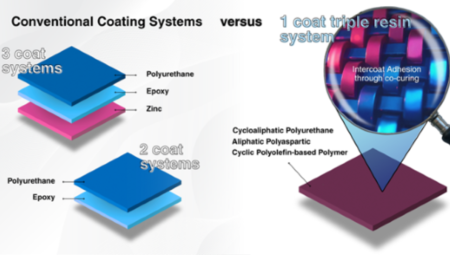
Current low-e paints usually have a silver or metallic gray color, whose aesthetics limit their use. Newly invented paints have two layers applied separately: an infrared-reflective undercoat that uses aluminum flakes and an ultra-thin infrared-transparent top layer that uses inorganic nanoparticles that comes in a wide range of colors.
The infrared spectrum of sunlight causes 49% of the planet's natural warming when absorbed by surfaces. To keep heat away, paint can be applied to exterior walls and ceilings.
Most of this infrared light passes through the color layer of new paints, reflects off the bottom layer, and comes back out as light, without being absorbed by building materials in the form of heat. To keep the heat inside, the paints are applied to the interior walls where, again, the bottom layer reflects infrared waves that transfer energy through space and are invisible to the human eye.
Suitable for application in refrigerated transport
Specifically, up to about 80% of mid-high infrared light is reflected by paints, doing most of the work of keeping heat indoors during cold weather and outdoors during hot weather. The color layer also reflects some near-infrared light, which improves air conditioning reduction.
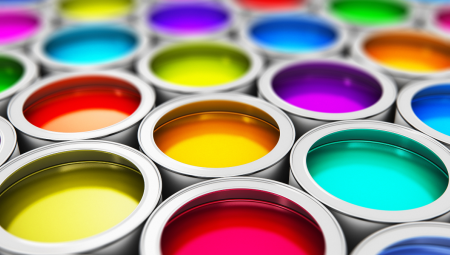
The research team tested their paints in white, blue, red, yellow, green, orange, purple and dark gray. They were 10 times better than conventional paints of the same colors at reflecting mid-high infrared light.
Paints can be applied beyond buildings to improve energy efficiency elsewhere. For example, they could cover trucks and train cars used for refrigerated transport, where refrigeration costs can account for up to half of the transport budget.
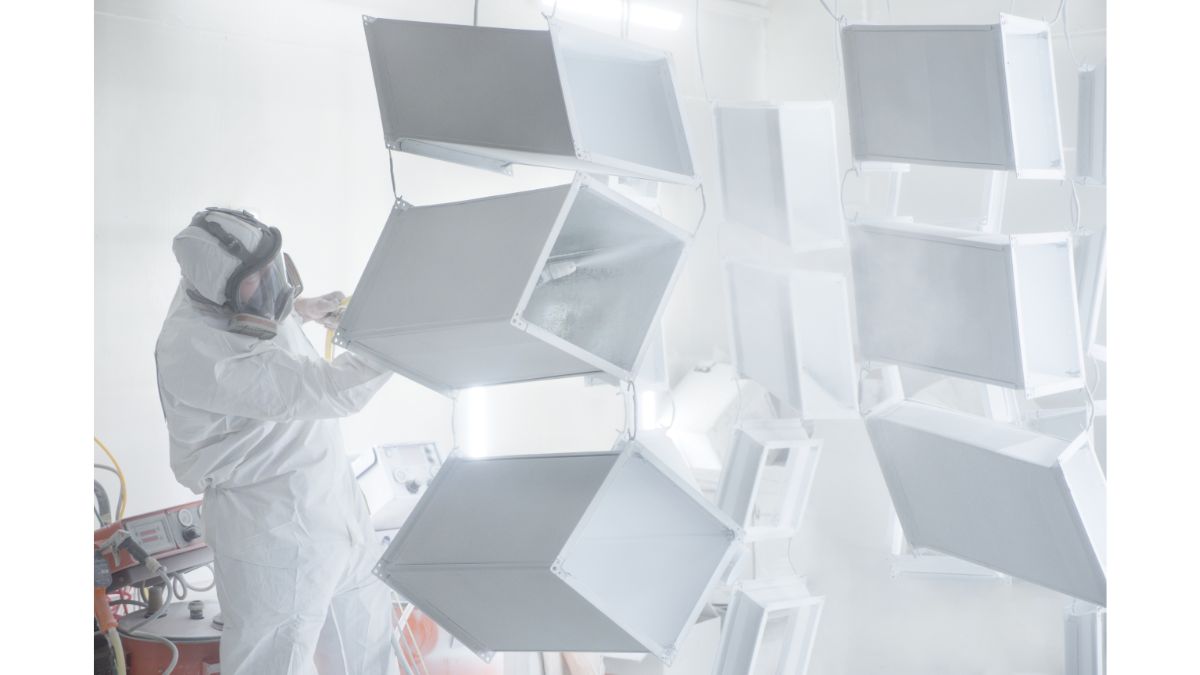
"Both layers can be sprayed onto a variety of surfaces of various shapes and materials, providing an additional thermal barrier in many different situations," said Yucan Peng, co-senior author of the study and a postdoctoral fellow at Stanford's Geballe Advanced Materials Laboratory.
Exhibits water repellency
The researchers also assessed how practical his paintings would be in various situations. Both layers are water repellent, which should improve stability in humid environments. Painted surfaces can be easily cleaned with a damp cloth or water.
In addition, the performance and aesthetics of the paints did not decrease after continuous exposure for a week to high temperatures (176 degrees Fahrenheit), low temperatures (-320.5 degrees Fahrenheit), as well as very acidic and low-acid environments. In fact, paint slightly increased air conditioning use in some U.S. cities, but no location showed an increase in total HVAC load.
"Our team continues to work to refine paint formulations for practical applications," said Jian-Cheng Lai, a postdoctoral scholar advised by Zhenan Bao, a professor of chemical engineering. "For example, water-based solutions would be more environmentally friendly than the organic solvents we use. That could make it easier to commercialize the paintings."