
United States. NETL researchers invent a new self-healing cold spray coating for internal corrosion protection of pipes. It can help corrosion protection in natural gas, hydrogen, and carbon dioxide (CO2) pipelines.
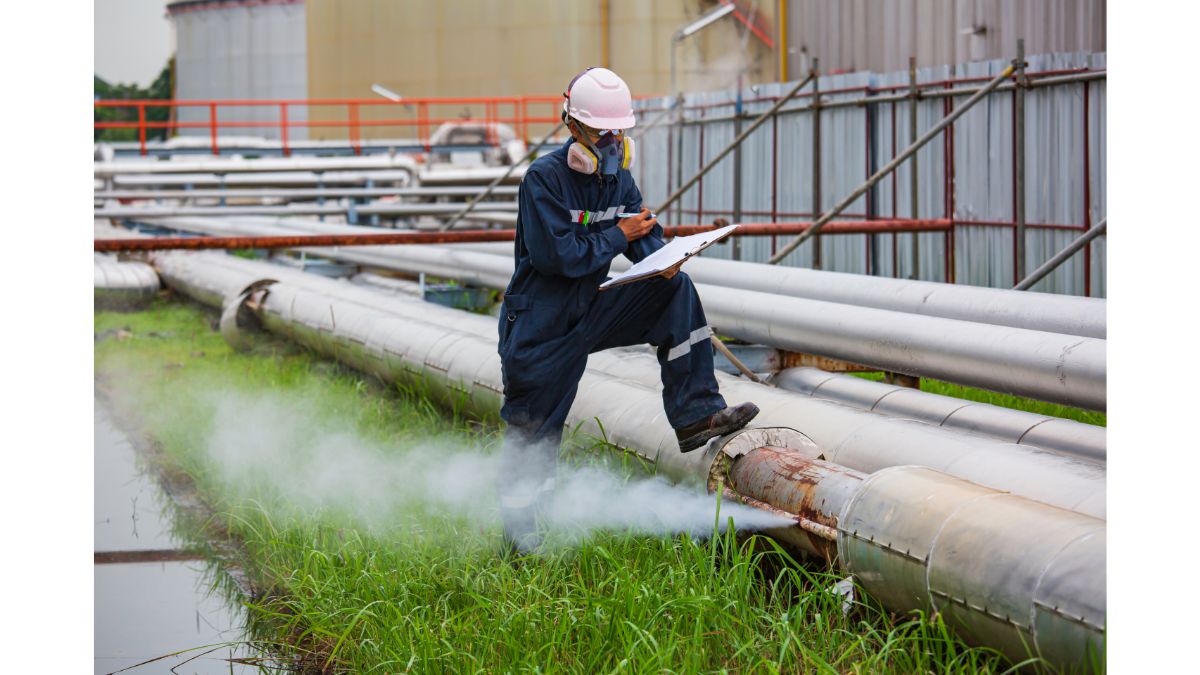
Corrosion of pipelines can cause catastrophic failures, such as explosions and emissions of environmentally harmful substances such as methane.
NETL is a U.S. Department of Energy national laboratory that drives innovation and provides technology solutions for an environmentally sustainable and prosperous energy future. NETL ensures affordable, abundant and reliable energy, while developing technologies to manage carbon throughout the full life cycle, enabling environmental sustainability for all Americans.
"Internal corrosion in pipelines is mainly due to the presence of water, carbon dioxide and hydrogen sulfide contained in natural gas. Internal corrosion can eventually result in leaks, cracks and pipe rupture, leading to explosion hazards and methane emissions," said Ömer Doğan, materials scientist at NETL.
"The invention consists of a novel zinc-rich material that creates an effective protective layer that resists dissolution compared to existing zinc sacrificial coatings. This new material can be applied to steel structures in a cold blasting process to protect them from the effects of corrosion," Doğan added.
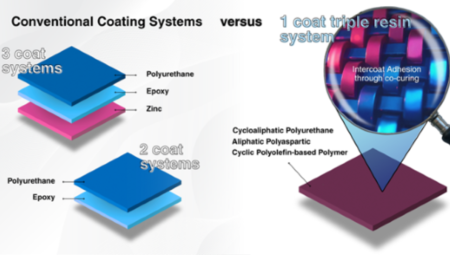
Traditional approaches to combating pipe corrosion included the use of inhibitors or organic coatings such as epoxy and polyurethane bonded by melting. Injecting inhibitors into natural gas or CO2 pipelines is challenging due to the difficulty of transporting the inhibitor along the pipelines.
The main disadvantage of using organic coatings for internal pipe protection is that they have poor abrasion resistance and can form a focal point of corrosion.
Doğan said another approach is to use sacrificial coatings to protect pipes and equipment from internal corrosion. A sacrificial coating, or anode, oxidizes more than the metal surface it protects, effectively stopping the oxidation of the metal. However, existing sacrificial liners tend to dissolve too quickly in natural gas pipelines.
Cold spraying is a high-energy solid-state coating and powder consolidation process for the application of metals, metal alloys and metal mixtures for numerous applications.
Cold spraying uses an electrically heated high-pressure carrier gas, such as nitrogen or helium, to accelerate metal powders through a supersonic nozzle for particle adhesion. The coating can be applied to the inside of a pipe by using a robotic cold spray device connected to a pipe scraper.
Some of the features and advantages of the new zinc-rich coating approach compared to existing approaches include its ability to remain stable, regardless of temperature/pressure changes in the service environment.
In addition, according to the company, it does not form defects during cold spray deposition, resulting in a longer service life.
To this is added self-healing when damaged by the formation of protective products against corrosion.
It also does not require periodic application (long life) and has to be used as a structural material to repair used/damaged pipes.
An Invention Report (ROI) was disclosed on June 30, 2023 and assigned 23N-12.