
International. Researchers at ETH Zurich led by Markus Niederberger and Walter Caseri of the Multifunctional Materials Laboratory have developed a plastic that could greatly improve and simplify corrosion protection.
Poly(phenylene methylene) is the name of the miracle material (PPM for short).
When mixed as paint and heated, PPM can be sprayed on a surface and solidifies. The polymer indicates holes and cracks in the protective layer by not emitting fluorescence.
Repair any damage by yourself without further external intervention. And at the end of a product's useful life, the polymer can be completely removed and recycled with minimal material loss. The recycled polymer can then be applied to another surface without losing its special properties and functions.
About ten years ago, researchers in Niederberger's laboratory when they were working on the production of nanoparticles in a special organic solvent, under certain conditions, the solvent solidified, polymerized.
"That was unintentional and unwanted," Niederberger recalled. "At first we didn't know what to do with it either."
The polymer created by accident, known as PPM, exhibited high thermal stability, emitting fluorescence even though conventional wisdom suggested it shouldn't fluoresce at all. And so, the researchers specifically refined the material.
First, a PhD student improved polymer synthesis. After that, his successor, PhD student Marco D'Elia, set out to find a useful application for PPM.
"And he did this job with great success," said Walter Caseri, who oversaw D'Elia. His contacts with corrosion experts at the Università degli Studi di Milano also proved fruitful, Caseri said.
It can be recycled and reused.
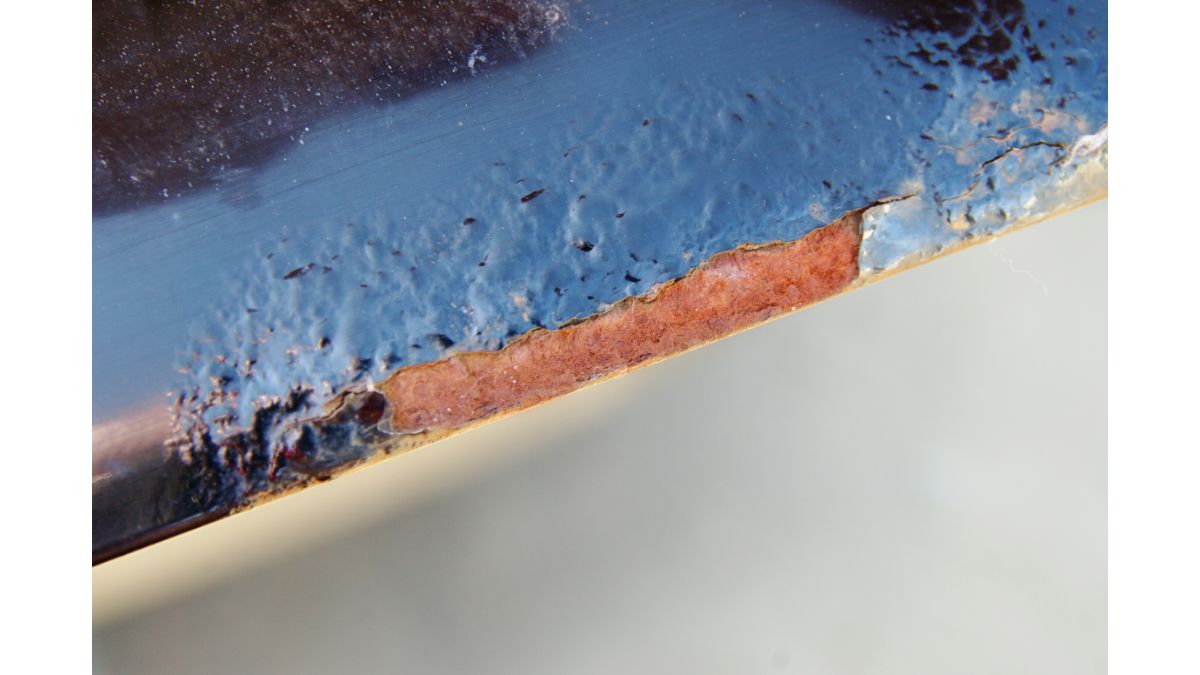
Laboratory tests revealed that a PPM-based coating protects metals, especially aluminum, well against corrosion.
Although this protective coating can be applied in layers up to ten times thinner than conventional protective agents, such as those based on epoxy resins, it is durable.
PPM is also more sustainable than previous corrosion protection materials because it can be completely disposed of and recycled at the end of the product's useful life. While some polymeric material is lost in the process, the recycling rate is very high, at 95%.
In their tests, the researchers were able to reuse the material five times.
The polymer seals any damage to the coating by itself. "Self-healing mechanisms are in high demand, but they are very difficult to come by and good solutions are still scarce," Caseri explained.
Self-repair usually requires chemical additives, which migrate into the polymer over time and are released into the environment.
Not so with PPM, "this material does not require any additives," Caseri continued.
Studies on the sustainability of PPM-based corrosion protection also show that the polymer performs better than epoxy-based corrosion protection materials when it comes to both environmental impact and human health.
"There are really only two epoxy resin disposal solutions, incineration or landfill," D'Elia said. "Our product enables a third solution, recycling."
PPM corrosion protection is not completely harmless to the environment. "Synthetics always have an impact," D'Elia explained. "But if you choose the right approach, you can limit that impact greatly." The former PhD student expects PPM corrosion protection to be commercialized.