
The coatings industry is undergoing a technical transformation that is redefining its operational practices. Beyond innovation in formulas or finishes, two axes advance simultaneously and complementarily: the safety of the applicator and the sustainability of the materials.
By Paint Zone
Both aspects have evolved from peripheral considerations to central to central to the development, formulation and implementation of coating systems, both in industrial environments and in sectors such as packaging.
Operational safety: from PPE to comprehensive risk management
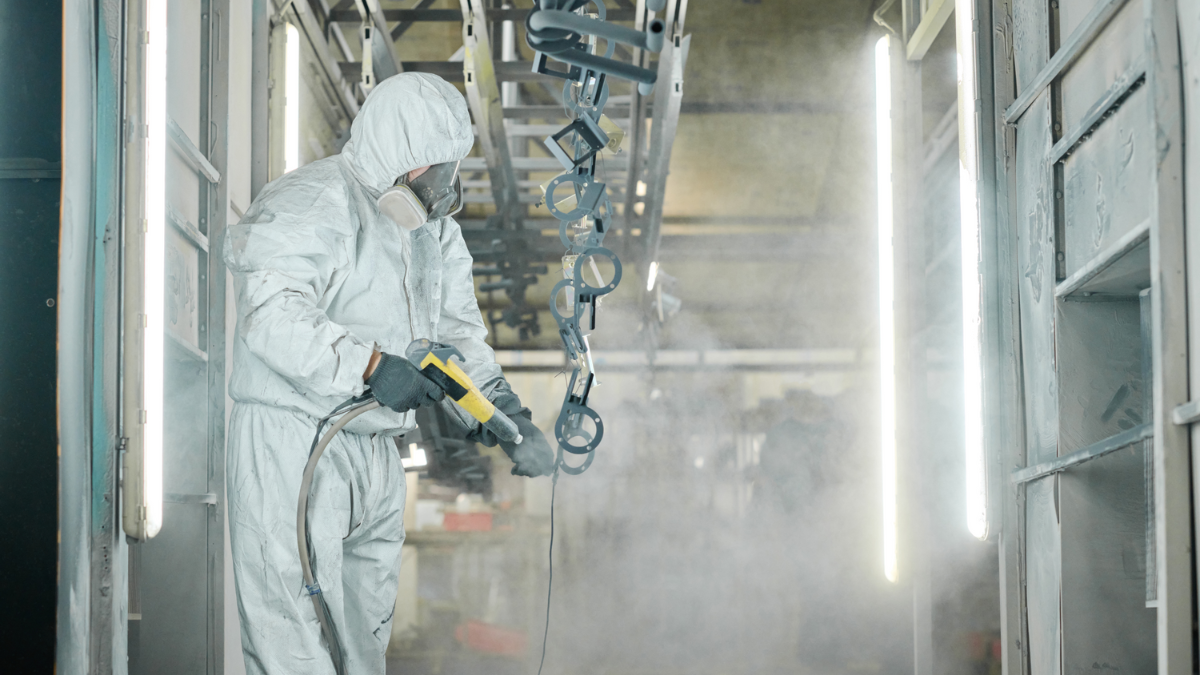
In terms of safety, protocols and personal protective equipment (PPE) have evolved based on new product chemical profiles. Applications involving polyurethanes, epoxies or isocyanate compounds currently require more specialized protection systems: respirators with specific filters, suits with chemical barriers, dielectric footwear, multilayer gloves and certified anti-scratch and anti-fog lenses.
The Colombian Association of Industrial Safety (ACSI) indicates that in the last two years the demand for technical safety training for applicators grew by more than 35%, driven by the increase in fast-curing and high-performance products. This evolution is part of a global trend. An article published in March 2025 by CoatingsPro Magazine notes that "as coatings become more sophisticated, so do security equipment: smarter, stronger, and more customizable."
The text documents how industry players such as Malta Dynamics and the American Society of Safety Professionals (ASSP) have signed memorandums of understanding with organizations such as ISEA and NIOSH for the joint development of standards. These alliances have made it possible to integrate technologies, form standardization committees, promote intersectoral training programs and create unified protocols in respiratory, eye and skin protection.
Mike Lange, Vice President of Sales at SolvChem, states in Coatings World (May 2025) that "worker safety in solvent handling is not just about compliance. It is a culture of protection. Smart security is smart business." In small batch coating plants, where solvent handling is constant, their recommendations include standardized use of PPE, ventilation control, safe storage, ongoing training, and emergency drills. "Even the most sophisticated equipment is only as safe as the people who use it," he emphasizes.
Sustainable coatings: functional materials and regulatory requirements
Sustainability has also gained traction, particularly in the formulation of barrier coatings for packaging. The replacement of conventional plastic layers with renewable materials has become a regulatory and market priority. Companies such as BASF, Henkel, AkzoNobel and Mondi have introduced biodegradable and bio-based coating lines, aimed at replacing polyethylene or polypropylene films on cardboard or paper substrates.
A Smithers report, titled Sustainable Barrier Coatings on Paper and Paperboard to 2023, identified the top 20 innovations in this field. Based on surveys of experts from across the carton value chain, the report concludes that "the wider adoption of sustainable barrier technologies has the potential to transform the entire value chain over the next five years."
100% of the study participants agreed that "you can't make a sustainable product with petroleum-based materials." 98% indicated that sustainability is a strategic pillar, and 90% added that a truly sustainable product must be renewable, recyclable, biodegradable and with a low carbon footprint.
In Latin America, the BIO-SUHY initiative, co-funded by the European Union, has developed proposals applicable in Colombia and Brazil, using nanocellulose, modified starch and natural waxes to achieve fluorocarbon-free barriers and chlorinated resins.
Emerging technologies: biopolymers, dispersions and hybrid mixtures
Among the most promising solutions are advanced aqueous polymer dispersions, biopolymers such as PLA (polylactic acid) and PHA (polyhydroxyalkanoates), and polymers such as PVOH and EVOH. These materials are already used in multilayer paperboard coatings for food and beverages. In 2018, their combined production was 28,900 tonnes, with a projected year-on-year growth of 5.4%.
PLA, initially derived from sugarcane and now also from agricultural residues, is one of the most researched biopolymers. Smithers says that "it will be the material that will contribute the most to a sustainable future for carton packaging". Although it presents technical challenges such as low thermal stability, new high-purity resins have demonstrated resistance up to 140 °C.
Other alternatives such as PBS, PEF, and chitosan compounds are also analyzed, as well as emerging technologies such as nanocellulose, thermoplastic starch, and nanosilicates. The advantage for coatings manufacturers lies in their previous experience in formulation, film behavior and adhesion to substrates, which allows knowledge to be transferred to these new applications.