
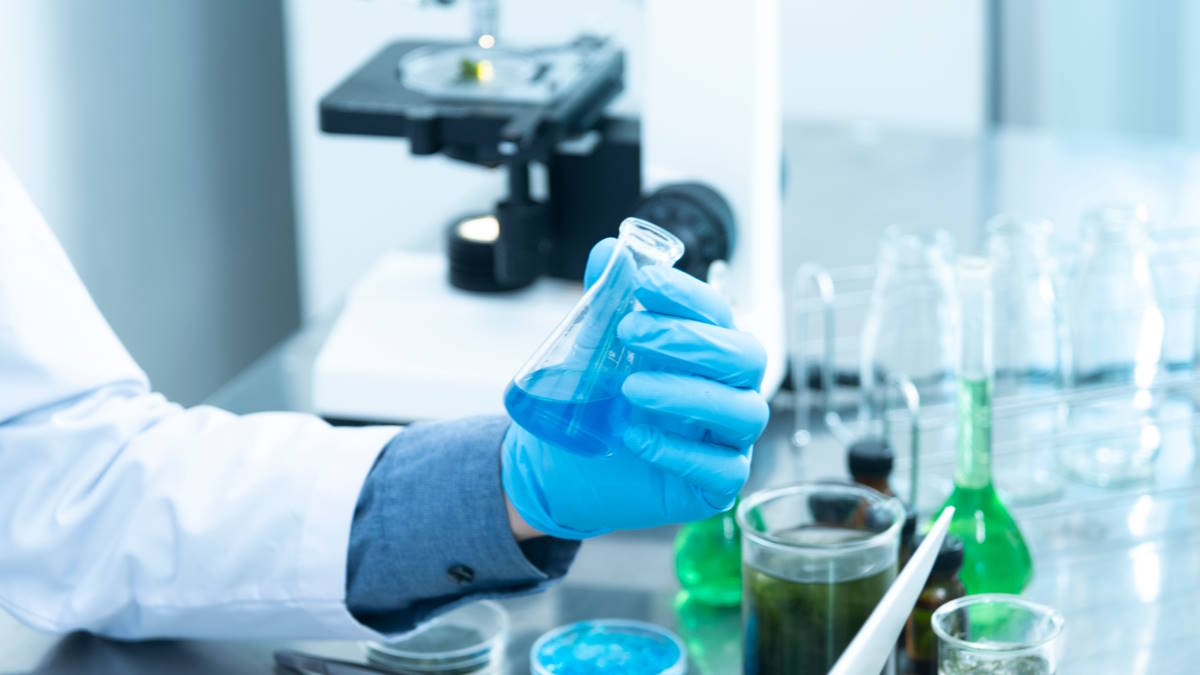
In the manufacture of liquid products, from the smallest scale to complex industrial processes, foaming is one of the factors that must be controlled and monitored.
By Vanessa Palomo Vizcaino*
Many times, we seek the formation of foam, stabilize it and, why not, maintain it in systems that provide us with benefits; such as detergents or cosmetic products, in many processes their formation is inevitable. But how can we control this unwanted characteristic in industrial processes such as a coating?
 The presence of foam in the paint process would not only affect the optimal, homogeneous mixing and final characteristics that the brand designer wishes to bring to market, but also leads to negative consequences for the cost and time of production.
This is why it is not surprising that when formulating paints, inks or coatings, the appropriate choice of an antifoamer is so necessary, according to the case. In the existing variety of formulation systems, options can be found that fit the needs of the process and the specific application objectives of the final product.
The mechanism of operation of an defoamer consists of lowering the surface tension in the film of a liquid that groups air bubbles inside. Once the surface tension is changed, the bubble cannot be stabilized again and loses continuity to continue storing air in the liquid. This is how the foam breaks in the process, even when the system is agitated.
Even though air is incorporated into the process through the stages of mixing, pumping, dispersing, or agitating the liquid, an defoamer must maintain its operation throughout the entire manufacturing line. And it is that while the product continues to move, also adding other molecules necessary in the formulation, the stability of the system is changed. This is designed on a laboratory scale to evaluate its effectiveness.
However, choosing the defoamer must be a balance between its main function and how it behaves chemically in the formulation with other additives, how it modifies the surface tension of the liquid, the type of water-based or solvent-based system, the solids content, product storage and the time needs in coalescence. Also the effects it brings to the final finish; its viscosity, drying time, and application methods.
Knowing the system to be formulated and the manufacturing design, we can know if a surfactant that is an antifoamer or a deaerator will be needed. The first tries to prevent the formation of bubbles or break their stability so that they do not continue to form in the process, compared to a deaerator that, by having bubbles in the process, works as a controller of these, so that they do not group in larger size and can release the contained air. Although depending on the type of chemical structure, an defoamer could work as both.
It is important to consider the type of foam that can be generated in the manufacture of a chemical; While macrofoam is visible, microfoam can make it more difficult to remove from the system. They are small air bubbles trapped in the liquid that, with the effects of agitation and mixing, create a complexity of air release, resulting in defects in the final finish.
Like any formulation, each aspect and contribution of the individual additives is taken into account and how it can affect (or work) as a whole. This is not an easy task, and formulators will be left with the question of choosing a good product under all possible conditions of their particular process.
The main references designed for this application are composed of mineral oils, stearates, silicones and other organic elements. It can be considered, and with a view to the new regulations and the 2030 agenda, that a selective factor of the products be free of APEO and low VOC.
How to avoid foam according to the system to be formulated
- Low-viscosity liquid systems: surfactants based on mineral oils are regularly added in their total composition or modification of them.
- High viscosity liquid systems: formulated with modified or siliconized polyester products. Under high viscosity conditions, a microfoam can be created if air fails to exit the coating film while coalescence occurs, as the resistance for air bubbles to rise is much higher.
- Concrete systems, where third-generation water reducers are used as polycarboxylates, the use of modified, siliconized or silicone-free defoamers is recommended. In these systems, pH efficiency should be monitored, as a very alkaline medium reduces the effectiveness of the defoamer.
Best Practices for Adding the Additive in the Process
- Distribute the amount of defoamer or defoamers to be used; one proportion in the initial stage of dispersion of the coating or paint and the other half to adjust the product. This will ensure foam control in manufacturing and final application.
- Balance the dosage of the products.
- Do not dilute the surfactant before adding it to the formula and mix well.
How to test the effectiveness of an antifoamer
- Foam height can be measured as a function of time, under controlled stirring conditions. This allows us to assess the foam formed and how it is destabilized in the system.
- The formation of bubbles in the application of the dry film; We can determine if it produces unfavorable effects on the paint, such as loss of brightness or craters. To correct these defects, the dosage of the defoamer or the chemistry of the defoamer should be considered.
- Evaluation of the application of the final product, for the different systems in which it was designed. This is in conjunction with the rheology of the product and the foaming to determine if the desired parameters are met when pouring the liquid from one container to another, generating movement, or application with rollers, brushes, etc.
The demand for these products is increasing due to application needs; Not only for paints, inks, adhesives or construction coatings, but also in water treatment, paper production, detergency, cosmetics and agribusiness, aiming at the continuous improvements of formulators. Mainly due to environmental development aspects, silicone products have a wide range of usefulness in manufacturing processes, mineral oil and additives compatible with water-based systems.
By 2028, the market for these additives is expected to reach around five trillion US dollars. This without neglecting the development opportunities to be compatible with products with low environmental impact, in accordance with green labeling certifications, Swiss A regulations, European EcoLabels, FDA and others.
Market Source: https://introspectivemarketresearch.com/reports/defoamers-market/
*Chemical Engineer
Technical-commercial developer of raw materials/coatings