

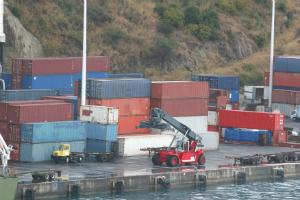
 For some the decisions in Argentina seek to protect their country with benefits that are not yet seen, for others these solutions were taken lightly, and for paints and coatings professionals, this situation does not yet affect the sector, perhaps it can benefit it.
by Ana María Restrepo and Duván Chaverra Agudelo
In February 2012 the Argentine government made the decision to restrict imports to the country seeking to favor local industry, preserve foreign exchange and increase exports, but for some countries that have trade relations with Argentina, this has been an erroneous decision of the administration of Cristina Fernández and have established complaints before the World Trade Organization, WTO.
In order to explain Argentina's actions, Colombian economist Isabel Cristina Calvo says that when countries want to strengthen the domestic economy and boost local production, they take restrictive measures on exports, increase tariffs, tariff restrictions on certain groups of products based on high import rates, among others; However, this situation in Argentina has meant that not only the entry of foreign products decreases, but Also Argentine exports are decreasing, since some countries have already begun to hinder the entry of their products.
In Brazil and Chile there have been reductions in Argentine imports and in Chile and Paraguay the decrease in exports to Argentina has brought consequences for exporting companies, since they have had to reduce the production of their products, lay off employees and even close.
This has generated a clash with some of the neighboring countries, so much so that the industrialists of Chile, Paraguay, Brazil, Uruguay and Colombia have asked the different governments for restrictive measures on Argentine products.
In Argentina the situation has already caused discomfort among entrepreneurs, because those companies that require foreign raw material have had to wait a long time to receive the merchandise, since the import process with the Advance Affidavit of Import (DJAI) takes more time than they can wait for the products for their production, generating a problem for them to comply with the negotiations and work day by day.
INPRA LATINA wanted to delve deeper into the subject, to know the position of some economists and specialists and what these restrictions imply for the paints and coatings industry in Argentina.
Isabel Cristina Calvo is an economist and advisor in international cooperation at the Secretariat of Competitiveness and Business Development of the Mayor's Office of Manizales, Colombia, and considers that the decision of the Argentine Government left without any diplomatic and legal value the commercial treaties with its commercial allies and is not a correctly political decision or framed in a sensible legal or macroeconomic framework.
"From my point of view, it denotes insecurity in the country's productive processes by not allowing the arrival of products from other countries that enhance, at least in raw material, national productivity. It cannot be forgotten that a large part of a country's reserves are those that are generated thanks to the existing balance in the trade balance (exports – imports), if we have a closed economy, where will part of those reserves be generated?"
For his part, Julián Rumpler, Lic. in Industrial Organization and Argentine specialist in material handling, from JR Asesoría Operativo, explains that the Argentine Government, seeking to favor the national industry, limited imports of products that can be manufactured without inconveniences in the country, however to start manufacturing a product anywhere in the world development is needed, technology, analysis and time, and this time did not have the Argentine entrepreneur to develop a good that was previously brought from abroad and suddenly already needs to be manufactured locally.
Regarding the delay in the ports, it is directly related to the DJAI, since "about 50% of the containers from abroad pass through the red channel, which implies the opening of the container and the exhaustive control of all the merchandise it contains. What seems so simple is causing an extension of the supply time of the order of 20 or 25%, which represents an increase in costs of between 8 and 12%, depending on the case, "explains Julián.
It should also be noted that the production chain of companies in Argentina will be affected at some point by the lack of a certain input, and it may happen that local production will not be able to meet the needs of manufacturers, generating an increase in prices and in the cost of production.
The restrictions imposed by the government broke almost all the security stocks of the producers, which led to a generalized shortage of raw materials with direct consequences on production, according to julian. It also considers that, speaking of benefits and disadvantages, this is a long-term project and it is essential that it be sustainable over time. "The companies that can benefit are those companies already installed and that manufacture products that have a certain relationship with what they want to start manufacturing and today it is scarce due to the restrictions. In these cases, the companies hire personnel to manufacture the new products and in this way they also benefit the country."
Beyond the inconvenience of time and costs, Isabel comments that the measure affects the manufacture of products in Argentina and its commercial allies, since when international trade agreements are established, they are signed based on specific needs of raw materials and inputs that the signatory countries need for the development of their local production. You cannot from one moment to the next make a unilateral decision without taking into account the needs of countries that relied on the foreign trade policy that was agreed with a nation.
In the face of the economic crisis that the world is experiencing, in the last seven months trade restrictions have been imposed that do not seem to fight the effects of the global crisis, but stimulate recovery through national industrial plans, which in general is a longer-term issue, according to the global director of the WTO. Pascal Lamy.
In this regard, Rumpler assures that the measures taken by the Argentine Government are neither more nor less than the same trade policies that the great powers are taking and seeing it from an individualistic point of view, any economy that is affected by a general crisis will take the same defense mechanisms to safeguard its own economy.
Tense calm
Some paint merchants in Argentina prefer to be prudent when it comes to commenting on the decisions of the local administration and think that it is better to wait to see how this process evolves and know what strategies they should apply.
According to data from the Argentine Industrial Union, in May, the local industry in general showed a year-on-year contraction of 5.1%. But compared to the previous month, it grew by 2%. While the National Institute of Statistics and Censuses revealed that sales of paints for construction fell by 15.9%, as a result of the setback suffered by this sector (-8.8%) during the month in question.
Despite the figures, paint traders do not seem to suffer significant effects with the restriction on imports. "Our company has had no problems with the government's decision. The only problem that has been generated for us was the time of administrative adaptation of the new measures," said Maximiliano Porras, from the sales department of Pinturas Venier.
For his part, Guillermo Ortega, owner of Propimat, commented on the matter that "in the channel of the paints that we distribute there have been no major problems, for now the supply has been normal, although we know of small inconveniences with some inks and with some missing in the industrial line and for automotive".
Regarding the favorability that this decision may have in the local industry, Maximiliano commented that "it neither favors nor harms, since the paints have a high brand value and it takes a while to impose them, so it is not a product that is easy to import or export it."
Guillermo says they must adapt to the changes: "We have to wait for how this business evolves. The biggest problems will be with companies that do not have a consideration for imports, that is, companies that do not export to other countries and that do import a lot of material."
Finally, both painters in Argentina gave their opinion on the measure of the national government.
"I think it's important to prioritize countries' economies. But it is one thing to do it and another thing is how it was done, and until the results are seen we will not know if the measure is right or wrong. It is good that the national industry is helped, but you have to be careful because as happened previously the prices increased and affected the market, "explained the owner of Propimat.
While the representative of Pinturas Venier said: "We do not believe that the restriction on imports in the paint industry has an impact, it would only influence to slightly raise the costs of the same in the short term."
Only time will really tell us how the local industry will behave, and what measures the actors in the sector will have to take, depending on the niche market to which they belong; the current situation shows us that the country is going through a time of uncertainty in which companies wait cautiously for how the market will evolve. It will dawn and we will see.











