
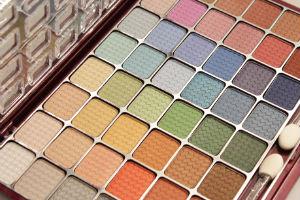
 One of the biggest challenges that manufacturers of pigments for makeup have is to achieve stability in the formulation, in addition to the little development of color guides for the handling of formulations also generates challenges.
by Víctor Alejandro Galvis González
The growth of the cosmetic industry in Latin America, mainly encouraged by Brazil and sophisticated countries in the industry such as Chile, Peru and Colombia, has led pigment manufacturers in the region to look for new alternatives to increase the offer of these products. The development of interference pigments, for example, has meant a new range in the manufacture of personalized makeup, as this class of pigments cause changes in the hue and saturation of color.
In general, pigments used specifically for the manufacture of makeup are more expensive than, for example, those used in the manufacture of paints and coatings. In fact, last year, the German distributor Merck KGaA announced the increase in prices in the global scope of its pigments and cosmetic raw materials, from five and in some cases up to 30% more than normal.
Raw material and energy costs triggered the increase. However, other characteristics of pigments for cosmetics such as microbiological purity and rigorous quality specifications raise their value.
"Pigments with Ecocert and Natrue certifications are some of the trends that are currently being handled in this market," says Patricia Buitrago Gamba, regional president of Bogotá of Accytec (Colombian Association of Cosmetic Science and Technology).
Ecocert and Natrue are control and certification bodies, which guarantee that natural products are composed of non-synthetic products, from organic farming and that they do not contain artificial preservatives.
Although the main objective of makeup is to provide a different color optics, "now it seeks to provide additional functional benefits to those of color, such as those of natural cosmetics with organic ingredients," says Maritza Pérez, executive member of Accytec.
Effect pigments
The unique color combinations seen in makeup are the authorship of the pigments that compose it. The size of the particle and the concentration of heavy metals generates different alternatives of brightness and color when formulating.
Interference pigments, also called effect pigments due to their versatility, give cosmetics properties such as color effects and sophisticated shine. They can be used in makeup, lipstick, lip balms, compact powders, eye shadow, eye pencil, mascara, or personal care products.
The fact that its appearance can change according to the angle of illumination or observation is very attractive for the cosmetic industry, reaching the point that effect pigments are essential to current manufacturers.
Their main advantage lies in their high versatility: being chemically inert, they are compatible with all cosmetic formulas.
On the other hand, pigments with metallic effects are conducive to making decorative makeup, based on a microencapsulation technology, combining excellent application characteristics with an unusual metallic glow, from silver and gold to an abundance in copper tones, diverse and striking effects.
A natural trend
According to Patricia Buitrago Gamba, regional president of Accytec, "the industry will have a significant tendency towards nature in the future", since "the market will continue to grow and the demand of consumers will also do so", says the specialist.
The use of synthetic dyes has led to several health problems, particularly in terms of allergies, for this reason cosmetic manufacturers have not hesitated to use natural pigments.
The pigments can be inorganic or organic, the first although they come from synthesis to achieve greater purity, are analogous to mineral products and therefore have a range of colors of natural tones frequently used in cosmetics.
On the other hand, organics are obtained by chemical synthesis that cover the entire spectrum of colors, offering more vivid tones than inorganic pigments. Some pigments such as chlorophyll are natural organic compounds, as well as caramel powder, chestnuts, ochre, mica and black earth from India among others.
Being insoluble products, pigments color by means of dispersion and the final tone depends on the dose and the process in the product in which it is applied.
Based on plants or land loaded with natural oxides, dyes offer a great palette of what nature can give us. In fact, other certifying bodies such as ECOCERT, COSMEBIO and BDIH prohibit the use of synthetic dyes.
Currently, due to "the decrease in the amount of pigments in formulation given their higher concentration, there are fewer deviations in the color standards batch by batch", concludes Maritza Pérez of Accytec, also the new substrates are encouraging the creation of new pigments.